Refractive errors cause blurred vision when the eye cannot focus light correctly. Myopia, hyperopia, and astigmatism are the most common refractive errors. These conditions can be corrected with glasses, contact lenses, or surgical methods.
Myopia is characterized by difficulty seeing distant objects clearly. It generally begins during childhood and may progress with age. Regular eye examinations and the use of appropriate glasses are the most effective methods for managing myopia.
Hyperopia is characterized by difficulty seeing nearby objects clearly. It may cause eye strain and headaches, particularly when reading. Glasses or contact lenses can improve visual quality and reduce symptoms.
Astigmatism causes blurred vision at both near and far distances due to irregular curvature of the cornea. Toric lenses or laser treatment may be used to correct this problem. Early diagnosis is important for preventing vision loss.
| Medical Name | Refractive Errors |
|---|---|
| Prevalence | Very common. A large proportion of the population may have one or more types |
| Risk Factors | Genetic predisposition, environmental factors, age-related changes |
| Symptoms | Blurred distance or near vision, headache, eye strain, double vision |
| Complications | Strabismus, particularly in children, amblyopia, reduced quality of life |
| Diagnostic Methods | Eye refraction test, autorefractometry, visual acuity test |
| Treatment Options | Glasses, contact lenses, refractive surgery such as LASIK, PRK, and phakic lens implants |
| Reasons for Surgery | Intolerance to glasses or contact lenses, high refractive errors |
| Prevention Methods | Cannot be prevented, but early diagnosis is possible through regular eye examinations |
A refractive error occurs when the eye cannot refract light correctly to form a clear image on the retina. The most common refractive errors are myopia, which affects distance vision, hyperopia, which affects near vision, astigmatism, which causes blurred vision, and presbyopia, which causes age-related difficulty with near vision. These conditions can be corrected with glasses, contact lenses, or laser surgery.
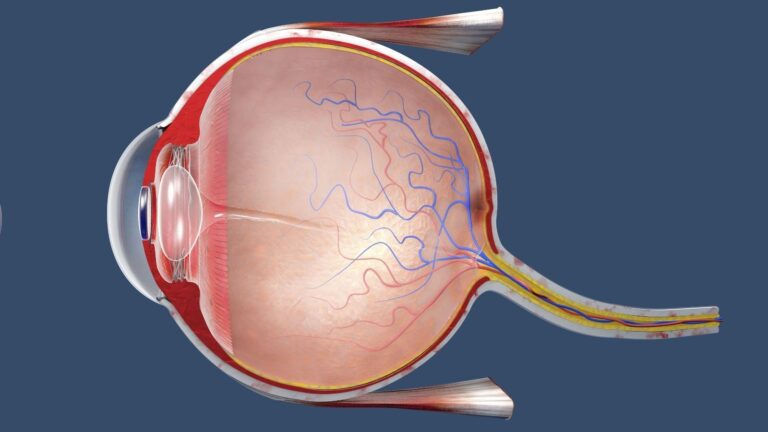
Normally, light is refracted by the cornea and lens and converges at a single point on the retina. The retina sends this light information to the brain, creating a clear image. When a refractive error is present, this focal point is displaced. Light may focus in front of the retina, behind it, or at multiple points. This is related to the structure of the eye, such as the eye being longer or shorter than normal or the cornea not being perfectly round. It is not an eye disease but rather a focusing problem.
The most common refractive errors are myopia and hyperopia. With myopia, distant objects are not seen clearly, while nearby objects remain clear. This is generally because the eye is slightly too long or the cornea is too curved, causing light to focus in front of the retina. The situation is reversed with hyperopia. Nearby objects are difficult to see, while distant vision may be clearer. In this condition, the eye is generally slightly too short or the cornea is not curved enough, causing light to focus behind the retina.
The other two important refractive errors are astigmatism and presbyopia. With astigmatism, the surface of the cornea or sometimes the lens is not smooth and spherical. It may be shaped more like the surface of an egg. This irregularity causes light to focus at different points, resulting in blurred or even distorted vision at both near and far distances. Presbyopia develops with age. It generally begins around the age of 40 and occurs when the natural lens loses its flexibility and becomes harder, reducing the eye's ability to focus on nearby objects.
Yes, it is quite common for a person to have more than one refractive error at the same time. For example, someone may have both myopia and astigmatism. Presbyopia may also develop with age in a person who already has myopia or hyperopia. These conditions must be considered when planning which glasses, contact lenses, or surgical method will be used to correct the person's vision. The selected correction method may need to address multiple focusing problems simultaneously.
Refractive errors are primarily caused by small differences in the physical structure of the eye. The first of these is the length of the eyeball. If the eye is slightly longer than normal, myopia develops. If it is slightly shorter, hyperopia develops. The second factor is the shape of the cornea. A cornea that is steeper or more curved than normal may cause myopia, while a flatter cornea may cause hyperopia. If the corneal surface is irregular rather than perfectly round, astigmatism develops. The thickness and shape of the natural lens, as well as its hardening with age, may also affect refractive errors.
In addition to differences in eye structure, certain factors may increase the risk of developing a refractive error. Genetic predisposition is one of these factors. Refractive errors are more likely in people with a family history of these conditions. Age is also an important factor. Presbyopia is directly related to aging, while myopia frequently begins during childhood or adolescence. Certain eye injuries, previous surgery, or eye diseases such as keratoconus may also cause a refractive error or alter an existing one.
The most fundamental symptom of a refractive error is blurred vision. However, this may not be the only symptom. Because your eyes continually make an effort to see clearly, you may experience headaches. When working on a task that requires concentration, you may experience eye fatigue, pain, burning, or stinging. This is called eye strain. Unconsciously squinting to see more clearly is another common symptom. There may also be double vision of a single object, particularly with astigmatism, or generally hazy vision.
In some situations, particularly when the refractive error is mild or in children, a person may not notice any symptoms. Children may consider blurred vision normal or may be unable to describe it. In young people, the eye's focusing ability, known as accommodation, may be so strong that it unconsciously compensates for refractive errors, particularly hyperopia. As a result, even when indirect symptoms such as headaches or eye strain occur, the person may not associate them directly with a vision problem. Regular eye examinations are therefore important even when no symptoms are present.
If you have myopia, the first symptom is blurred distance vision. You may have difficulty seeing text on a television screen, traffic signs, or a classroom board clearly. You may therefore frequently feel the need to squint. This difficulty when looking into the distance may also cause headaches or eye strain. Nearby objects are generally seen clearly. You may sometimes notice that your vision becomes even worse at night or in dim light. This is called night myopia.
Children cannot always express vision problems by saying, "I see things blurred." It is therefore important to observe their behavior. A child with myopia may sit very close to the television or hold a book or tablet very close to their face. They may blink or rub their eyes frequently. They may appear uninterested in distant objects or people. Their academic performance may decline because they have difficulty seeing the classroom board. If you notice these signs, arranging an eye examination would be advisable.
The main problem with hyperopia is difficulty seeing nearby objects clearly. Letters may become blurred when reading, looking at your phone, or performing detailed work. You may feel the need to squint to bring them into focus. After focusing at close range for an extended period, you may experience eye fatigue, burning, pain, or headaches. Distance vision may be better, but if the refractive error is high, distant objects may also appear blurred. You may also experience general eye discomfort or difficulty focusing.
The most characteristic symptom of astigmatism is not only blurring but also distortion of images. At both near and far distances, objects may appear elongated, bent, or shadowed, as though viewed through wavy glass. This occurs because the irregular surface of the eye prevents light from focusing at a single point. In addition to this distortion, astigmatism may cause blurred vision, eye strain, headaches, difficulty with night vision such as light scattering and glare, and squinting, just like other refractive errors.
Presbyopia, which is age-related difficulty with near vision, generally begins to appear during the 40s. Its most typical symptom is difficulty focusing on nearby objects. For example, when reading a book or newspaper, you may feel the need to hold the text farther away to bring the letters into focus. This is the situation commonly described as "my arms are not long enough." Vision becomes blurred at the usual reading distance. Your eyes may become tired, or you may experience headaches after performing near tasks. You may also notice that you need more light for reading than before. This is a natural result of aging.
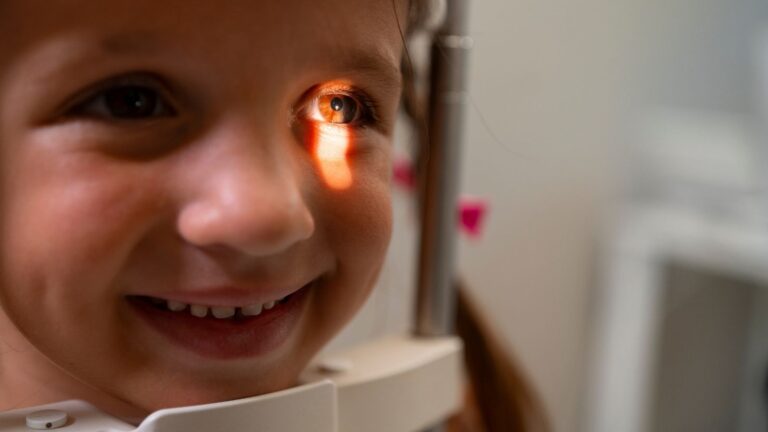
To determine whether you have a refractive error and identify its type and degree, you need to undergo an examination by an ophthalmologist. A comprehensive eye examination consists of several stages. Your ophthalmologist will first ask about your general health and eye-related complaints. Your visual acuity will then be measured, the refractive error will be determined, and your eye health will be examined in detail. Eye drops that dilate the pupils may sometimes be required.
Visual acuity measures how clearly you can see. You are generally asked to read letters, numbers, or shapes projected onto a wall or displayed on a screen from a specific distance. One of the most commonly used tests is the Snellen chart. During the test, one eye is covered, and you are asked to read the smallest line you can see with the other eye. The same process is then repeated for the other eye. The result is generally expressed as 20/20 or 6/6, indicating normal visual acuity.
A refraction test is performed to determine the exact type and degree of refractive error and identify the appropriate glasses or contact lens prescription. A device called a phoropter is generally used during this test. You sit in front of the device, and your ophthalmologist changes the different lenses inside it while asking questions such as, "Is it clearer with this lens or the other one?" Based on your answers, the prescription that provides the clearest and most comfortable vision is determined. Before beginning this test, your ophthalmologist may sometimes take an approximate measurement using a device called an autorefractor.
As part of the examination, your ophthalmologist may apply eye drops to dilate your pupils. This procedure has several purposes. First, when the pupil is dilated, the ophthalmologist can examine the inside of the eye, particularly important structures such as the retina and optic nerve, in much greater detail. This is important for determining whether another eye problem is present in addition to the refractive error. Second, particularly in children and young people, these drops temporarily relax the eye's focusing muscles. This allows the ophthalmologist to measure more accurately the true refractive error that the eye may normally conceal, particularly hyperopia.
If you have a refractive error, several different methods are available to help you see clearly. The purpose of treatment is to ensure that light focuses precisely on the retina. The most common and fundamental treatment options are glasses, contact lenses, and refractive surgery, also known as laser eye surgery. The most appropriate method should be selected together with your ophthalmologist according to the type and degree of your refractive error, your age, lifestyle, and expectations.
Yes, contact lens options are also available for specific conditions such as astigmatism and presbyopia. Toric lenses are used to correct astigmatism. These lenses have different refractive powers along different axes and special designs that allow them to remain in the correct position on the eye. Multifocal or bifocal contact lenses have been developed to correct presbyopia. These lenses contain different focal zones for distance and near vision within a single lens, similar to progressive spectacle lenses.
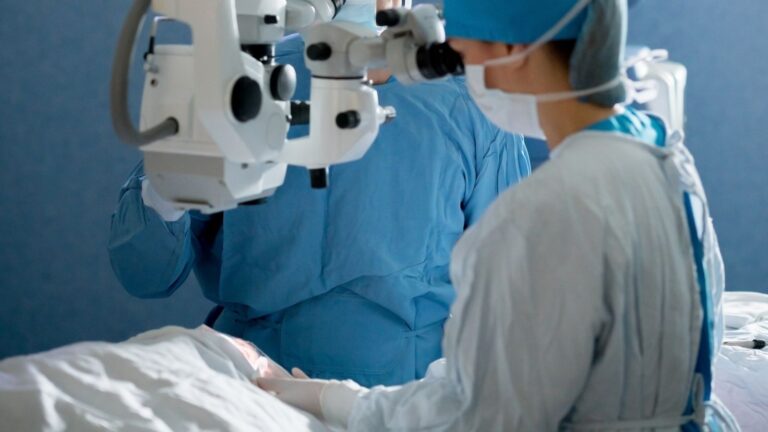
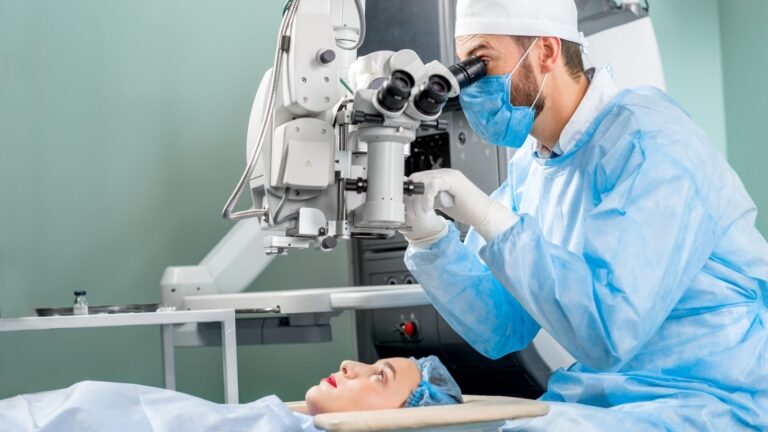
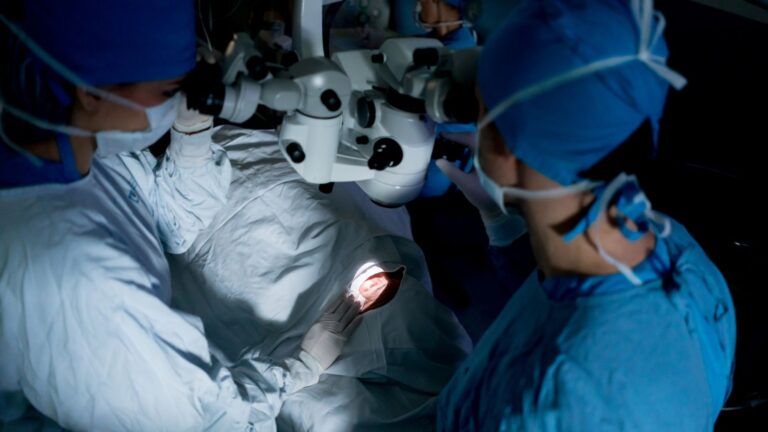
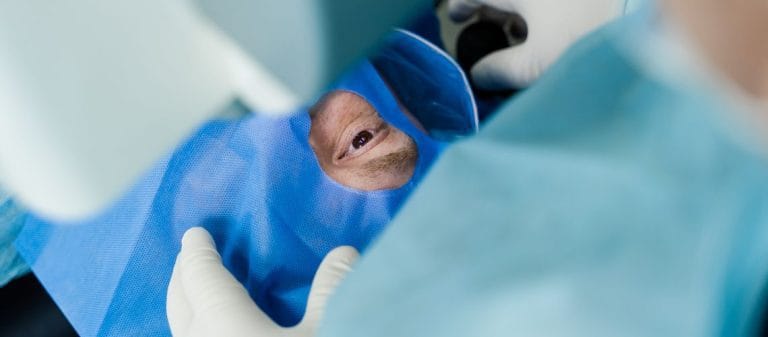
Refractive surgery is the general name for operations that permanently change the eye's refractive power to reduce or eliminate the need for glasses or contact lenses. It is commonly known as laser eye surgery. These operations can correct refractive errors such as myopia, hyperopia, and astigmatism. Different techniques are available. Some reshape the cornea with a laser, while others place artificial lenses inside the eye.
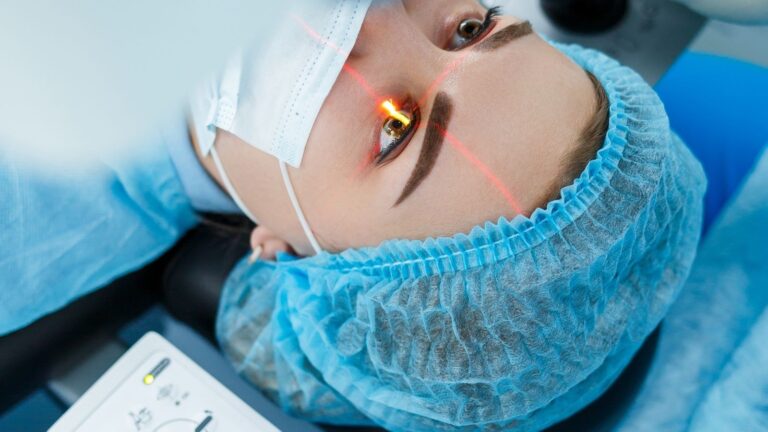
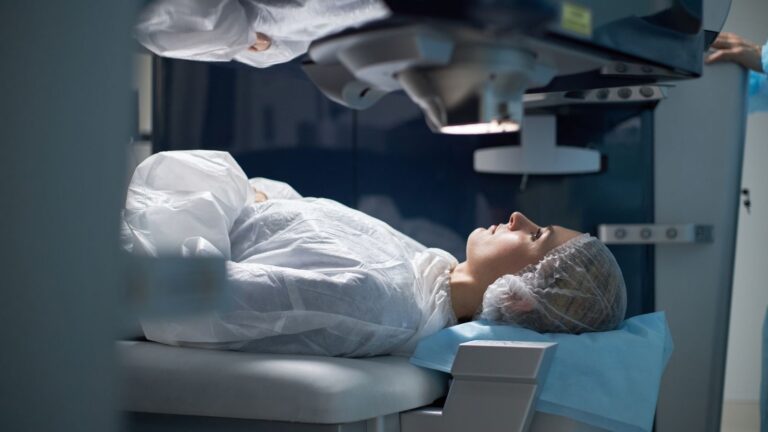
The most commonly performed refractive surgical procedures reshape the cornea using a laser. In these procedures, a specialized excimer laser is applied to the surface or inner layers of the cornea, the transparent outer layer of the eye. The laser changes the refractive power of the cornea by vaporizing or removing tissue at the micron level. This allows light to focus correctly on the retina. LASIK, PRK, and SMILE are the best-known laser procedures in this group.
When laser corneal reshaping procedures are unsuitable or insufficient, operations involving the placement of an artificial lens inside the eye are another option. One is the implantable collamer lens (ICL) procedure. The person's natural lens is left in place, and a very thin artificial lens is implanted in front of it, behind the iris. The other is refractive lens exchange (RLE). In this procedure, the natural lens is completely removed and replaced with an artificial intraocular lens that corrects the refractive error. This procedure is essentially the same as cataract surgery.
LASIK is one of the most popular types of laser eye surgery. During the procedure, a thin flap is first created from the upper layer of the cornea. This flap is folded aside like a hinged cover. An excimer laser is then applied to the underlying corneal tissue to reshape the cornea. Once the laser procedure is complete, the flap is repositioned and heals on its own without stitches. This method can correct myopia, hyperopia, and astigmatism.
The greatest advantage of LASIK is the rapid visual recovery. Patients generally begin to see quite clearly even the day after surgery. Postoperative pain or discomfort is usually minimal and short-lived. The procedure significantly reduces or completely eliminates dependence on glasses or contact lenses. It takes little time to perform and has very high success rates. It is a proven and reliable method that has been successfully performed on millions of people.
Whether you are a suitable candidate for LASIK is determined through a detailed eye examination. In general, you must be over 18 years old, your prescription must have remained stable for at least the past year, and the refractive error to be corrected must fall within certain limits. Your cornea must also have sufficient thickness and a healthy surface. Certain eye diseases such as keratoconus, uncontrolled diabetes or rheumatic diseases, pregnancy, or breastfeeding may prevent surgery.
Like LASIK, PRK corrects refractive errors by reshaping the cornea with an excimer laser. The main difference is that PRK does not involve creating a corneal flap as in LASIK. Instead, the very thin epithelial layer on the surface of the cornea is removed by scraping or laser ablation. The laser is then applied directly to the underlying corneal tissue. The epithelial layer regenerates on its own within several days. A bandage contact lens is generally worn during this period to protect the eye.
The most important advantage of PRK is that no flap is created, so potential flap-related complications such as displacement or wrinkling do not occur. It may therefore be preferred for people whose corneas are slightly too thin for LASIK or who have a high risk of eye trauma, such as certain athletes. Its disadvantages are slower recovery than LASIK and greater pain, stinging, and light sensitivity during the first few days after surgery. It may take several weeks to achieve clear vision. The risk of developing mild corneal haze is also slightly higher than with LASIK.
SMILE is a newer laser technology and may be considered a form of "flapless LASIK." In this method, a femtosecond laser creates a small lens-shaped piece of tissue, called a lenticule, inside the cornea. This lenticule is then removed through a very small incision, approximately 2 to 4 mm, on the corneal surface. Removing the lenticule changes the shape of the cornea and corrects the refractive error. Its main advantage is that it does not involve the large flap incision used in LASIK. It is therefore thought that corneal biomechanics may be better preserved and the risk of postoperative dry eye may be lower.
An ICL is a specialized lens placed inside the eye. It may be compared to a contact lens, but instead of being placed on the outside of the eye, it is positioned inside the eye, immediately behind the colored part called the iris and in front of the natural lens. The cornea is not treated during this procedure, meaning that it is not reshaped with a laser. The lens is inserted into the eye through a small incision. It is an excellent alternative, particularly for people with very high myopia or astigmatism whose corneal structure is unsuitable for laser procedures such as LASIK or PRK.
One of the most important advantages of an ICL is that it can correct refractive errors that are too high for laser treatment. Because the cornea is not treated, it is a good option for people with insufficient corneal thickness or dry eye problems. Another important advantage is that the procedure is reversible. The lens can be surgically removed if necessary or if better technology becomes available in the future. It generally provides very high-quality vision and includes UV protection.
ICL surgery also carries certain risks. One of the most important is that, although uncommon, it may contribute to the development of cataracts over time. An increase in intraocular pressure, known as glaucoma, may occur after surgery. The number of cells in the innermost layer of the cornea, known as the endothelium, may decrease, making regular follow-up important. As with any intraocular surgery, there is a risk of infection. Glare or halos around lights may also occur at night. An unsuitable lens size or position may rarely cause problems.
Refractive lens exchange is essentially cataract surgery performed to correct a refractive error. During this operation, the person's natural lens is removed and replaced, just as in cataract surgery, with an artificial intraocular lens calculated to correct the person's prescription. RLE is a good option, particularly for people over the age of 40 to 45 who have distance or near refractive errors together with presbyopia and are unsuitable for laser surgery. It is also frequently preferred for people with high hyperopia.
One of the greatest advantages of RLE is that it can correct distance and near refractive errors as well as presbyopia in a single operation. When multifocal or trifocal intraocular lenses, also known as smart lenses, are used, the majority of patients may become completely independent of glasses after surgery. Because the natural lens is removed, the future risk of developing cataracts is also eliminated entirely. It also offers a permanent solution for high refractive errors that are unsuitable for laser surgery.