Contents:
Hyperopia is a refractive error characterized by difficulty seeing nearby objects clearly due to the structural characteristics of the eye. Because light focuses behind the retina, reading small text and performing detailed tasks become particularly difficult. It can be corrected with glasses or laser treatment.
Symptoms of hyperopia include blurred vision, eye strain, headaches, and difficulty reading. Children are also at risk of developing strabismus. Regular eye examinations are necessary for early diagnosis and treatment.
Mild hyperopia may go unnoticed for a long time. However, it can affect academic performance in school-age children. In adults, it can cause discomfort during tasks that require prolonged focusing.
Treatment options include glasses, contact lenses, and laser surgery. The most appropriate method is determined according to the structure of the eye. Regular follow-up is important, especially because the need for reading glasses may increase with age.
| Medical Name | Hyperopia |
|---|---|
| Prevalence | Common in childhood, may improve with age or remain permanent |
| Risk Factors | Genetic predisposition, small eye structure (short axial length) |
| Symptoms | Difficulty with near vision, eye strain, headache, blurred vision |
| Complications | Strabismus, especially in children, amblyopia (lazy eye) |
| Diagnostic Methods | Autorefractometry, retinoscopy, eye examination |
| Treatment Options | Glasses, contact lenses, refractive surgery (LASIK, PRK) |
| Reasons for Surgery | High hyperopia, intolerance to glasses or contact lenses |
| Prevention Methods | Cannot be prevented. Early diagnosis and regular eye examinations are important |
Hyperopia is a refractive error in which nearby objects appear blurred, while distant objects appear clearer. It occurs when the structure of the eye causes images to focus behind the retina. Mild hyperopia may naturally be present in children, but higher degrees can cause headaches, eye strain, and difficulty reading. It is diagnosed through an eye examination. Treatment options include glasses, contact lenses, and refractive surgery.
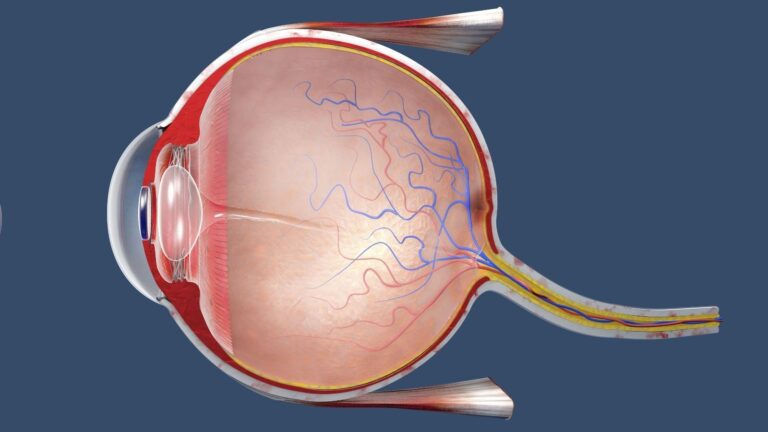
Hyperopia usually results from certain structural differences in the eye. The most common cause is an eye that is slightly shorter than normal from front to back. If we think of the eye as a ball, we can imagine this ball being slightly flattened. Because of this shorter length, light focuses at a point behind the retina rather than directly on it.
Another common cause is insufficient refractive power in the cornea, the transparent outer layer of the eye, or in the lens inside the eye. In other words, the cornea or lens cannot bend light strongly enough to focus it on the retina. This may generally result from the cornea being flatter than normal. More rarely, a reduction in the refractive power of the natural lens or changes in the position of the lens inside the eye may also cause hyperopia. In short, hyperopia results from a mismatch between the eye's optical power and its length.
Hyperopia can manifest in various ways. Although everyone's experience is different, certain common symptoms are frequently observed. Some of the most common general symptoms of hyperopia include:
- Blurred vision when looking at nearby objects, such as books or phones
- A feeling of tiredness and pain in the eyes, especially after near work
- Headaches after frequent or prolonged near focusing
- The need to squint or rub the eyes to see more clearly
- Difficulty or reluctance to focus on near tasks
- Losing track of lines while reading or becoming tired quickly
- Blurred distance vision in severe hyperopia
If you experience one or more of these symptoms, it may be helpful to have an eye examination.
Yes, symptoms of hyperopia in children may differ somewhat from those in adults and can sometimes be more difficult to notice. The main reason is that children's natural lenses are highly flexible, giving their eyes a strong ability to focus, known as accommodation. Thanks to this strong focusing ability, many children, particularly those with mild or moderate hyperopia, can compensate for the condition on their own and see both near and distant objects clearly.
However, this constant extra effort by the eyes may manifest indirectly. For example, even if your child says that they can see clearly, they may be reluctant to engage in near activities such as reading or playing, become bored quickly, or have difficulty concentrating. Frequent eye rubbing, squinting, or complaints of headaches, particularly in the evening, may be hidden signs of hyperopia. In cases of higher and undetected hyperopia, more serious problems such as eye misalignment, known as strabismus, or reduced vision in one eye compared with the other, known as amblyopia, may develop. This is why it is very important for children to have eye examinations at regular intervals.
In adults, symptoms of hyperopia usually begin with difficulty seeing objects at close range clearly. Common complaints include letters becoming blurred while reading a book, working at a computer, or looking at a phone, straining to see clearly, eye fatigue and pain, and headaches that occur particularly later in the day or after prolonged near work.
With advancing age, particularly after the age of 40, these symptoms may become more noticeable or may even appear in people who have never experienced such a problem before. This occurs because the natural lens of the eye loses its flexibility with age, gradually reducing our ability to focus on nearby objects, known as accommodation. This condition is called presbyopia and is a natural part of aging. Hyperopia that remained unnoticed during youth because of the eye's strong focusing ability, known as latent hyperopia, can no longer be compensated for once presbyopia begins and therefore becomes apparent. In this situation, difficulty with near vision increases, a person may begin to need reading glasses even if they did not need them previously, and in some cases may also experience slight blurring of distance vision.
Yes, the severity or degree of hyperopia greatly affects the type and intensity of the symptoms a person experiences. Ophthalmologists measure hyperopia in a unit called a diopter (D).
- In low hyperopia, up to +2.00 diopters, young people and children in particular may not notice any problems. The eye's natural focusing power can easily compensate for this mild refractive error. However, mild fatigue or, rarely, headaches may occur after prolonged near activities such as reading or looking at a computer.
- In moderate hyperopia, between +2.25 and +5.00 diopters, symptoms become more noticeable. It becomes more difficult to see nearby objects clearly, and text may appear blurred while reading. Complaints such as eye strain, headaches, and difficulty focusing occur more frequently and become more bothersome. In children, uncorrected hyperopia at this level may negatively affect attention and learning.
- In high hyperopia, +5.25 diopters or above, the condition is more serious. Both near and distant objects may appear blurred. Eye strain and headaches are generally more severe and may be more persistent. Particularly in children, high hyperopia carries a risk of causing significant problems such as strabismus and amblyopia. Early diagnosis and appropriate treatment are therefore vital.
Latent hyperopia, as its name suggests, is a type of hyperopia that is temporarily hidden or masked by the eye's own focusing effort, known as accommodation. Particularly in young people and children, the eye muscles may be so strong that they continually compensate for existing hyperopia without the person being aware of it. As a result, the person may be able to read letters clearly during a standard vision test and appear to have no problem.
However, this constant extra focusing effort is very tiring for the eyes. Therefore, even if people with latent hyperopia say they can see clearly, they may experience certain symptoms during the day or particularly after prolonged near work such as reading or computer use. These symptoms may include eye strain, a dull ache in the eyes and head, difficulty focusing, and occasional brief episodes of blurred vision. In children, reluctance to read or study and difficulty concentrating may also be associated with latent hyperopia. The most definitive way to detect latent hyperopia is through a detailed eye examination using special eye drops that temporarily relax the eye's focusing muscles.
Eye strain, medically known as asthenopia, and related headaches are very common complaints in people with hyperopia. The main reason is that the hyperopic eye must constantly make more effort than normal to obtain a clear image, meaning that it must accommodate excessively. The small muscles inside the eye, known as the ciliary muscles, attempt to increase the refractive power of the lens so that the image focuses on the retina. This constant contraction eventually causes the eye muscles to become fatigued, just like other muscles in the body.
Eye strain may present as a feeling of heaviness around the eyes, burning, stinging, dryness, or, conversely, excessive watering. These sensations become more noticeable particularly after prolonged reading, computer use, or work requiring attention to fine detail. Headaches are typically felt in the forehead or temples. They may sometimes spread across the entire head and feel throbbing or pressure-like. These headaches usually occur later in the day or immediately after demanding visual activity. Because such symptoms can reduce quality of life, it is important for the underlying cause to be assessed by an ophthalmologist.
Although hyperopia can occur at any age and in anyone, certain circumstances may slightly increase the likelihood of developing it. Some factors that may increase the risk of hyperopia include:
- A family history of hyperopia, meaning genetic predisposition
- Certain genetic conditions, such as Down syndrome
- Advanced age, as hyperopic symptoms may increase with presbyopia
- Maternal smoking during pregnancy, which may increase the risk for the unborn child
- Premature birth
- Low birth weight
- Certain systemic diseases, such as diabetes
- Previous eye surgery or trauma
Having one or more of these factors does not necessarily mean that you will develop hyperopia.
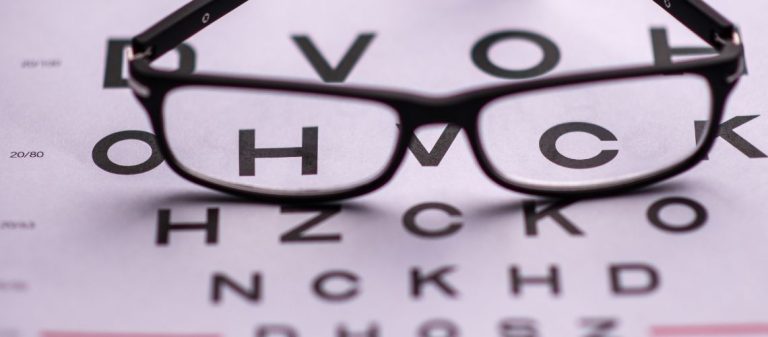
Hyperopia is diagnosed through a careful and comprehensive eye examination performed by an ophthalmologist. A simple letter chart test, which measures visual acuity, may not be sufficient to detect hyperopia, particularly the type that can remain hidden in children or young people.
During a detailed examination, information is first obtained about your medical history and that of your family, and your symptoms are discussed. Various tests are then performed. Your visual acuity is measured at different distances. A refraction examination is then performed to determine the exact refractive error of your eye. During this examination, an objective measurement may be obtained using computerized devices called autorefractors, or the refractive error may be assessed with a special light source and different lenses using a method called retinoscopy.
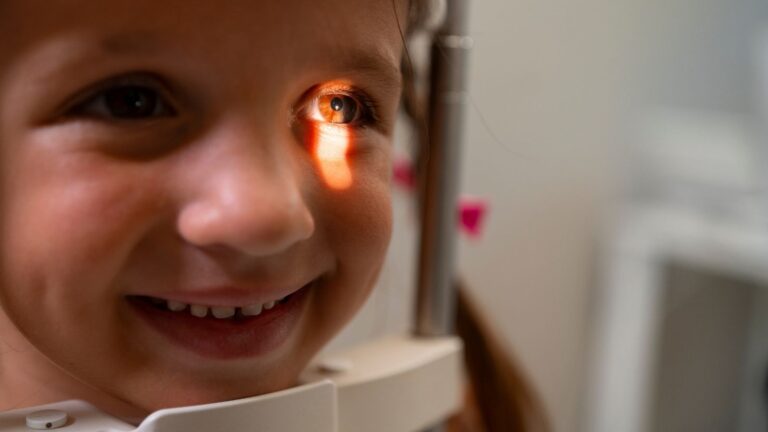
Particularly in children, young people, or individuals whose symptoms do not correspond with the measured values, eye drops called cycloplegics are used to temporarily disable the eye's natural focusing mechanism. These drops make it possible to clearly determine the eye's true and complete refractive error, including latent hyperopia, and therefore the total degree of hyperopia. The front and back parts of the eye are also examined in detail using a special microscope called a slit lamp to assess overall eye health.
Yes, various classifications are used to better understand hyperopia and determine the treatment approach. The most common and familiar classification is based on the severity or degree of hyperopia. It is divided into three categories: low, moderate, and high hyperopia. This classification is determined according to the diopter value indicated by your glasses prescription.
Another important distinction is based on how the eye's focusing ability, known as accommodation, affects the condition. In this context, latent hyperopia refers to the portion that the eye conceals through its own effort. Manifest hyperopia is the portion that persists despite this effort. Manifest hyperopia can also be divided into the facultative portion, which the person can overcome with additional effort, and the absolute portion, which cannot be overcome. The value measured when focusing is completely relaxed with eye drops is called total hyperopia.
Hyperopia may also be classified according to its cause as simple, or physiological, pathological, or functional. Simple hyperopia is the most common form and usually results from variations in the structural characteristics of the eye that are considered normal. Pathological hyperopia is associated with conditions such as disease, trauma, or abnormal development of the eye. These classifications help define the condition more clearly and determine the most appropriate course of treatment.
Hyperopia, particularly when it is severe or is not detected and corrected during childhood, may contribute to certain undesirable conditions and vision problems. Early diagnosis and the initiation of treatment when necessary are therefore very important. Some possible complications of untreated hyperopia include:
- Amblyopia: Particularly in children, if one eye has a higher degree of hyperopia than the other or if both eyes have high hyperopia, the brain may prefer the eye that sees better, and visual development in the other eye may fall behind. This can result in permanent visual impairment.
- Strabismus: Children with high hyperopia attempt to focus excessively to see clearly. This excessive focusing effort may cause the eyes to turn inward, a condition known as accommodative esotropia.
- Chronic eye strain and headaches: The constant effort to see clearly can cause eye fatigue, pain, and frequent headaches, negatively affecting quality of life and, particularly in children, academic performance.
- Learning difficulties: Uncorrected hyperopia in children may cause difficulties with reading and learning, as well as problems with attention.
- Risk of angle-closure glaucoma: The anatomical structure of hyperopic eyes, including a shorter eye and a narrower anterior chamber angle, may slightly increase the risk of developing a serious type of elevated eye pressure called angle-closure glaucoma later in life.
To help prevent such conditions, hyperopia should be taken seriously and regular eye examinations should not be neglected.
Changes in hyperopia over time vary from person to person. Many babies are mildly hyperopic at birth. This is a normal part of eye development. As the eyeball grows and develops, the degree of hyperopia usually decreases on its own or disappears completely. This natural process is called emmetropization and generally continues until school age.
However, hyperopia may remain permanent in some children. During young adulthood, mild or moderate hyperopia may go unnoticed because of the eye's strong ability to focus, known as accommodation. The person may compensate for the condition using the eye muscles. This is known as latent hyperopia.
With advancing age, particularly after the age of 40, age-related difficulty with near vision, known as presbyopia, begins. The natural lens loses its flexibility, making it difficult to focus on nearby objects. During this period, previously latent hyperopia also begins to become apparent. The person has difficulty compensating for both the existing hyperopia and presbyopia. As a result, complaints related to near vision increase, and even people who did not previously wear glasses may begin to need reading glasses. In some cases, a slight deterioration in distance vision may also be noticed. The aging process can therefore make the symptoms of existing hyperopia more noticeable.
Hyperopia and presbyopia can both cause difficulty seeing nearby objects clearly, but they have different origins and occur at different times.
Hyperopia is primarily a structural characteristic of the eye. It results from factors such as the eyeball being shorter than normal or the cornea being unable to refract light sufficiently. It is generally present from birth or develops during childhood.
Presbyopia is a natural consequence of aging and usually becomes noticeable after the age of 40. It occurs when the natural lens inside the eye gradually loses its flexibility and becomes harder. This loss of flexibility makes it difficult for the lens to change shape in order to focus on nearby objects.
What happens when these two conditions occur together? When a person with hyperopia also develops presbyopia, they usually begin to experience difficulty with near vision at an earlier age or more severely. This is because hyperopia already requires the eye to make an extra focusing effort for near vision. When presbyopia further reduces this focusing capacity, it becomes much more difficult for the person to compensate for both hyperopia and presbyopia. Hyperopia that remained hidden in youth because of the eye's strong focusing ability may become more noticeable with the onset of presbyopia and may increase the need for glasses.
The long-term course of hyperopia largely depends on the severity of the condition, when it was diagnosed, and how effectively it is managed. Hyperopia that is detected early and corrected appropriately during childhood generally has a good outcome. Many children with mild hyperopia may naturally outgrow the condition as their eyes develop. However, if moderate or high hyperopia is not treated, it may lead to permanent problems such as amblyopia or strabismus. Regular follow-up and the use of glasses when necessary are therefore very important in children.
In adulthood, hyperopia generally does not change significantly. However, as presbyopia develops with age, near-vision complaints increase and the need for glasses may change. When hyperopia is appropriately corrected, people generally have comfortable vision. The management of hyperopia primarily includes:
- Glasses: The most common, safe, and effective correction method.
- Contact lenses: A good alternative for people who do not wish to wear glasses.
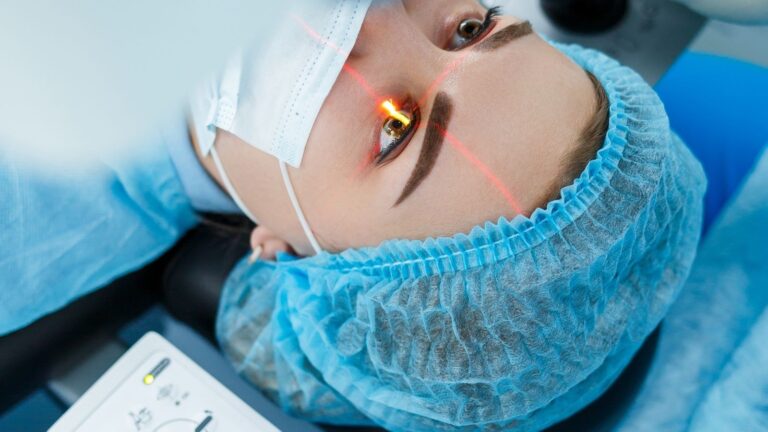
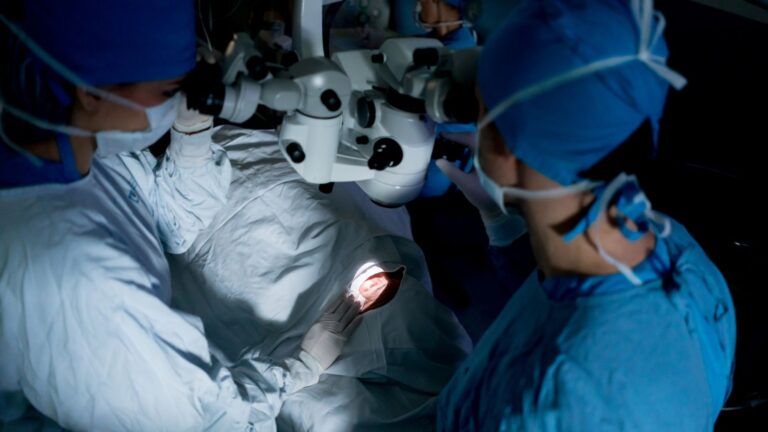
- Refractive surgery, or laser treatment: Laser procedures such as LASIK and PRK, or intraocular lens surgery, aim to correct hyperopia permanently in suitable candidates.
The most appropriate option for you should be determined together with your ophthalmologist after a detailed eye examination.
Unfortunately, there is no known way to completely prevent the development of hyperopia, particularly when there is a genetic predisposition. The shape and structure of the eye are largely determined by hereditary factors. However, there are many things we can do to protect our general eye health and minimize the effects of possible problems associated with hyperopia. Although completely preventing hyperopia is difficult, some steps you can take to protect your general eye health include:
- Having regular eye examinations
- Wearing high-quality sunglasses to protect against harmful ultraviolet rays
- Following a balanced diet containing vitamins and minerals that support eye health, such as green leafy vegetables, fish, and carrots
- Taking regular breaks when looking at a computer, tablet, or phone screen for extended periods, such as by following the 20-20-20 rule
- Ensuring that reading and working environments are adequately and appropriately lit
- Avoiding cigarettes and other tobacco products
- Regularly monitoring chronic diseases such as diabetes under medical supervision
- Protecting your eyes from possible accidents and injuries.
What type of visual impairment is hyperopia?
Hyperopia occurs when light focuses behind the retina because the eye is too short from front to back or the cornea is not sufficiently curved. Difficulty with near vision is its most prominent symptom.
What are the symptoms of hyperopia?
Difficulty seeing nearby objects clearly, eye strain, headaches, and blurred vision are the most common symptoms. Prolonged reading or computer use may particularly increase these complaints.
What causes hyperopia?
Genetic factors, congenital differences in eye structure, or an age-related reduction in lens flexibility may cause hyperopia. Congenital hyperopia is common in children.
What is the difference between hyperopia and age-related presbyopia?
Hyperopia is a structural refractive error that is present from birth. Presbyopia develops when the lens loses its focusing ability with age and usually appears after the age of 40.
How is hyperopia diagnosed?
It is diagnosed through a refraction test and eye examination. The degree of the refractive error is determined after an examination with corrective lenses or dilating drops, and appropriate treatment is planned.
How can hyperopia be recognized in children?
Children generally see distant objects clearly but perceive nearby objects as blurred. Symptoms such as squinting, headaches, or reluctance to read may indicate hyperopia and require an early examination.
Which methods are used to treat hyperopia?
Treatment is generally provided with glasses or contact lenses. In adults, laser treatment such as LASIK or PRK may provide permanent correction. In severe cases, intraocular lens surgery may be performed.
What happens if hyperopia is not treated?
If untreated, the constant use of the eye muscles may cause eye strain, headaches, and blurred vision. The risk of strabismus or amblyopia may also increase in children.
Can hyperopia be completely corrected with laser treatment?
Yes, permanent correction with laser treatment is possible in patients with a suitable corneal structure. However, factors such as tear quality and age are important when deciding on surgery.
What should people with hyperopia pay attention to?
They should not neglect regular eye examinations, determine their glasses prescription on their own, or use digital screens without taking breaks. Working in well-lit environments also reduces eye strain.