
Frequent blinking in children may be caused by refractive errors, dry eyes, or allergies. It may sometimes occur as a symptom of a tic disorder. Correctly identifying the cause is important for determining the treatment approach.
In children with visual impairment, blinking may be a reflex associated with blurred vision. A detailed eye examination is therefore required. Correcting refractive errors may reduce the symptoms.
Eye tics are generally associated with stress, fatigue, or attention disorders. They are usually temporary, but a neurological assessment is required if they persist.
Treatment is planned according to the underlying cause. Eye drops, eyeglasses, or psychological support may be required. Early intervention improves the child's quality of life.
Blinking is a vital reflex that protects eye health. Its main purpose is to protect the eyes from dryness, uncomfortably bright light, and foreign substances such as dust that may enter the eye. Each time we blink, the tear film spreads evenly across the eye surface. This moisturizes, nourishes, and cleans the eye. Tears form a thin protective film that helps the eye see clearly and acts as a shield against external factors.
Blinking frequency changes with age. A newborn baby generally blinks only twice per minute. This number increases as the child grows and reaches an average of 14 to 17 times per minute during adolescence, continuing at this rate in adulthood. Babies blink less because their tear film is more stable and the opening between their eyelids is smaller. As a result, their eyes dry out more slowly. This increase in blinking frequency is not only related to protecting the eye surface. Certain chemical processes in the brain and maturation of the nervous system are also thought to play a role.
Frequent blinking in children is a condition in which a child moves their eyelids more often than normal or usual. It may affect one eye or both eyes. Sometimes the blinking movements may be stronger or more pronounced than usual. Other involuntary movements or tics involving the child's face, head, or neck may also accompany frequent blinking.
Distinguishing between normal blinking and blinking that may be considered excessive is not always easy. It may be helpful for parents to observe their child's blinking behavior carefully for several days. Normal blinking is usually an occasional and barely noticeable action. Excessive blinking may be clearly frequent, repetitive, and noticeable. It is also important to observe whether blinking is triggered while watching television, reading, during stressful moments, or by environmental factors such as bright light and wind. Since the concept of "excessive" is relative, it is more meaningful to consider how the condition affects the child's daily life, school performance, or social relationships rather than focusing only on the number of blinks. If frequent blinking causes difficulties in these areas or is accompanied by other symptoms such as redness, itching, pain, headache, or blurred vision, the child should be evaluated by a specialist.
Eye tics are sudden, involuntary, repetitive contractions or movements of the eyelids or muscles surrounding the eyes. They may appear as rapid blinking, frequent squinting, or twitching of the eyelids. Tics are generally harmless, but they may sometimes be a symptom of a more complex condition.
It is important to distinguish frequent blinking from an eye tic. "Eye twitching" is generally a milder, temporary contraction limited to a specific area. An "eye tic" refers to a more persistent, repetitive, and sometimes more complex involuntary movement. Eye tics may continue for weeks or even months. Frequent blinking is generally a response to a stimulus such as eye irritation or dryness. Eye tics are more commonly neurological in origin and are generally associated with a difficult-to-suppress urge that occurs before the movement.
Some key differences that may help distinguish between the two conditions include:
- Origin: Frequent blinking is generally a reflex, such as when something enters the eye. An eye tic is usually neurological.
- Duration: Frequent blinking is usually shorter in duration and associated with a trigger. Eye tics may continue for weeks or months.
- Suppressibility: Frequent blinking can be partially suppressed. Eye tics are more difficult to suppress and may even increase afterward when suppressed.
- Premonitory Urge: This is generally absent with frequent blinking but often present with eye tics.
- Other Accompanying Tics: Frequent blinking is rarely accompanied by other tics. Eye tics may be accompanied by other motor or vocal tics.
- Intensity: Frequent blinking is generally gentler. Eye tics are more forceful and sudden.
The underlying causes of these conditions in children vary considerably. They may involve the eyes, the nervous system, or psychological and behavioral factors. During the diagnostic process, the most common and easily treatable eye-related causes are generally investigated first.
The outer surface of the eye and the eyelids are highly sensitive to external factors. Any irritation, infection, or structural problem in these areas may increase blinking frequency as a protective reflex.
Dry Eye Syndrome: This occurs when the ocular surface is not adequately moisturized because the amount of tears is insufficient or their quality has deteriorated. Increased digital screen use and air-conditioned environments may trigger this condition, particularly in children. Symptoms of dry eyes in children may include:
- Burning in the eyes
- Stinging sensation
- Redness
- Gritty sensation
- Blurred vision that increases toward the end of the day
Foreign Body and Corneal Abrasion: A small particle of dust or sand entering the eye, or a scratch on the cornea caused by contact with a fingernail, may cause severe pain, stinging, tearing, and frequent reflex blinking. It generally begins suddenly and affects one eye.
Conjunctivitis, or Eye Inflammation:
Allergic Conjunctivitis: This is one of the most common causes of frequent blinking in children. Allergens such as pollen and house dust mites cause intense itching, redness, and tearing. The child frequently rubs and blinks their eyes to relieve the itching.
Infectious Conjunctivitis, or Pink Eye: This is caused by bacteria or viruses. It may trigger frequent blinking together with symptoms such as redness, discharge, and stinging.
Yes, they can. Visual impairments, or refractive errors, cause an unclear image because the eye cannot focus light properly. Children may unconsciously blink more frequently to correct the blurred vision or reduce eye strain. The main visual impairments include:
- Myopia, or difficulty seeing distant objects clearly
- Hyperopia, or difficulty seeing nearby objects clearly
- Astigmatism, or blurred or distorted vision
These refractive errors are diagnosed through a comprehensive eye examination performed by an ophthalmologist, particularly a dilated examination in children, known as cycloplegic refraction. Uncorrected refractive errors may cause not only frequent blinking but also headaches, difficulty concentrating, and reduced school performance.
Yes, certain problems involving the structure of the eyelids or the position of the eyelashes may cause continuous irritation of the eye surface and increase reflex blinking. These include inflammation of the eyelid margin, or blepharitis, inward-growing eyelashes, or trichiasis, complete inward turning of the eyelid, or entropion, and a skin fold that pushes the eyelashes inward, known as epiblepharon, which is particularly seen in some children. These conditions cause mechanical irritation, trigger frequent blinking, and may lead to more serious problems if left untreated.
Yes, some types of strabismus may be associated with frequent blinking. Strabismus is a condition in which the eyes do not look at the same point. Children may blink more frequently to prevent double vision caused by strabismus or to align the deviating eye temporarily. This is frequently observed in certain types of outward eye deviation.
Yes, one of the most common causes of frequent blinking in children is a transient tic disorder. This is a condition in which one or more motor tics, such as blinking, continue for less than one year. Habitual tics are repetitive movements that may be triggered by factors such as stress and fatigue. These tics are usually benign and generally resolve on their own without requiring specific treatment. If the eye examination reveals no problem, it is important not to draw excessive attention to the child's blinking because this may increase stress and prolong the tics.
Tourette syndrome is a complex neurodevelopmental condition that begins in childhood and involves multiple motor tics and at least one vocal tic lasting longer than one year. Eye-related motor tics such as blinking and eye rolling are common in Tourette syndrome and are usually among its first symptoms. Additional conditions such as ADHD and OCD may also occur with this syndrome. The diagnosis is based on clinical observation. A simple blinking tic may be an early sign of Tourette syndrome if it is accompanied by other tics and continues for a long time.
Yes, PANDAS and PANS are conditions characterized in some children by sudden-onset neuropsychiatric symptoms following certain infections. These symptoms include tics, including blinking, and obsessive thoughts and behaviors, or OCD. The symptoms generally begin very suddenly and are severe. These conditions should be considered when sudden and severe eye tics occur.
Absolutely. Stress, general anxiety, extreme fatigue, and even intense excitement may make existing tics more pronounced or create conditions for new tics to develop. Stress and anxiety may increase muscle tension. Fatigue and insufficient sleep may increase susceptibility to involuntary movements. Recognizing this relationship is important for finding a solution.
Yes, certain medications may cause tics, including frequent blinking, as a side effect or worsen existing tics. These include certain stimulant medications used to treat ADHD, some antidepressants, and antipsychotics. Medication-related tics generally improve after changing the medication or adjusting the dose. This situation must be discussed with the doctor who prescribed the medication.
Although frequent blinking and tics are usually associated with benign causes, they may rarely be a sign of a more serious underlying neurological disorder. These may include certain types of epilepsy, Wilson disease, childhood multiple sclerosis, or brain tumors. However, these conditions are generally accompanied by other serious neurological or systemic symptoms in addition to blinking.
If you notice frequent blinking or an eye tic in your child, the first step is generally to consult your pediatrician. The pediatrician will perform a general assessment and refer you to a specialist if necessary.
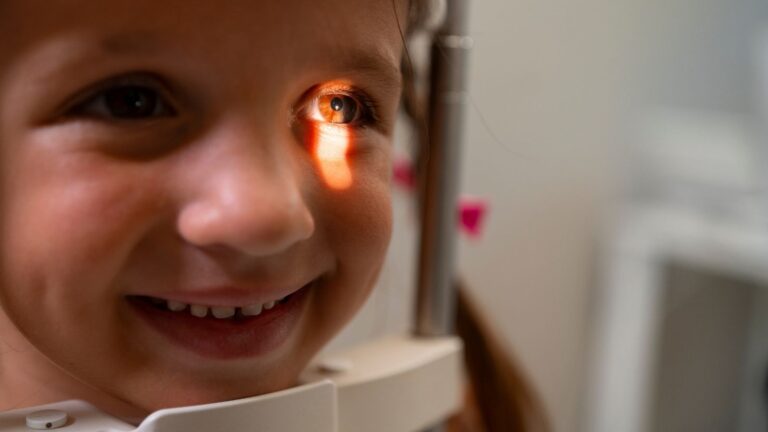
If frequent blinking negatively affects the child's daily life, has continued for a long time, or is accompanied by additional symptoms such as redness, pain, or discharge, an ophthalmologist should be consulted. The ophthalmologist will perform a detailed eye examination to investigate possible eye-related causes such as refractive errors, dry eyes, allergies, infections, and eyelid problems. This examination includes evaluating all structures of the eye using specialized instruments and performing measurements with eye drops if necessary.
If no cause is found during the eye examination and the tics continue, consulting a pediatric neurologist may be appropriate. This is particularly important if other motor or vocal tics are present, the tics have continued for longer than one year, or they began suddenly and are very severe. The pediatric neurologist evaluates the child for tic disorders such as Tourette syndrome or conditions such as PANDAS and PANS. If considered necessary, advanced tests such as an EEG or brain imaging may be requested.
Treatment is determined entirely according to the underlying cause. The aim is to relieve the symptoms and improve the child's quality of life.
Treatment of Underlying Eye Problems:
If the cause is eye-related, treatment is directed at the underlying problem.
- For refractive errors: Appropriate eyeglasses.
- For dry eyes: Lubricating drops and lifestyle changes, such as managing screen time and humidifying the environment.
- For allergic conjunctivitis: Avoiding allergens and using antiallergic drops or medications.
- For infections: Antibiotic drops or ointments.
- For eyelid problems: Specialized cleaning and sometimes surgery.
- For strabismus: Eyeglasses, patching therapy, or surgery.
Management of Tics:
A gradual approach is generally followed when managing eye tics.
- Reassurance and Education: Particularly with transient tics, the first step is to inform the family and child that the condition is benign and may resolve, and to advise them not to focus excessively on the tics.
- Behavioral Therapies: Non-medication treatments such as Comprehensive Behavioral Intervention for Tics (CBIT) are effective for chronic tics or Tourette syndrome.
- Stress Management: Since stress may increase tics, teaching stress-management techniques may be beneficial.
- Medication: This is considered if the tics significantly affect the child's life, cause physical discomfort, or do not respond to behavioral therapies. This decision and follow-up must be managed by a pediatric neurologist or child psychiatrist.
Environmental and Lifestyle Adjustments:
Certain lifestyle adjustments may also help control the symptoms. These include:
- Limiting screen time according to the child's age
- Taking regular breaks while using screens, such as following the 20-20-20 rule
- Ensuring that the environment is sufficiently lit without straining the eyes
- Avoiding known allergens
- Ensuring sufficient, high-quality sleep
- Managing general stress levels
The attitudes of families and educators are extremely important for managing the child's symptoms and supporting their psychological well-being. Once a serious underlying eye problem has been ruled out, the family should be clearly reassured that the condition is usually benign and will improve over time, particularly in cases of transient tics. It is extremely important for families to remain calm and supportive, avoid drawing excessive attention to the child's tics, and refrain from constantly commenting on, criticizing, or punishing the child for them. Such negative reactions may cause embarrassment and anxiety in the child and worsen the tics.
It is also beneficial to inform teachers at school about the condition and encourage them to adopt an understanding attitude. Tics may affect the child's social relationships and self-esteem. It is therefore important to provide an environment in which the child can express their feelings without fear of being judged and, if necessary, seek support from a child psychologist.
Although the condition is usually benign, certain symptoms may indicate a serious underlying problem and require urgent medical evaluation. Recognizing these "red flag" symptoms is vital. Medical attention should be sought immediately in the following situations:
- Sudden and severe eye pain
- Sudden reduction or loss of visual acuity
- Extreme sensitivity to light, or photophobia
- Pronounced redness of the eye and cloudiness or a white spot on the cornea
- Sudden and pronounced swelling of the eyelid or difficulty opening the eyes
- Yellow, green, or bloody discharge from the eye
- Newly developed strabismus or double vision
- A white or abnormally colored reflection in the pupil, particularly in photographs
- Abnormal pupil shape, a difference in pupil size, or lack of response to light
- History of eye trauma
- Additional systemic or neurological symptoms such as fever, deterioration in general condition, changes in consciousness, or seizures
- Symptoms worsening rapidly within a very short time