
Eye drops after cataract surgery are used to reduce the risk of infection, control inflammation, and promote healing. Regular and correct application is critical to the success of the operation.
Antibiotic, corticosteroid, and artificial tear drops are generally prescribed. Applying the drops at the frequency and dose recommended by the physician forms the basis of treatment.
Hygiene is important when applying eye drops. Cleaning the hands, preventing the dropper tip from touching the eye, and following the recommended intervals help prevent infection.
The drops should not be missed during treatment. A physician should be consulted if symptoms worsen or an allergic reaction develops. Regular use helps protect vision.
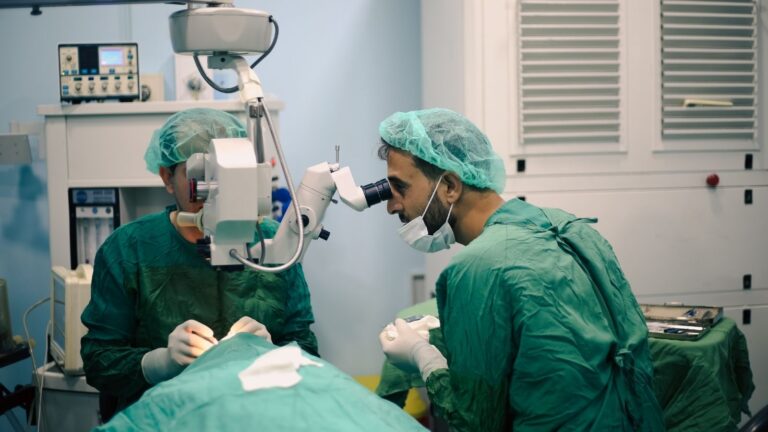
Cataract surgery is performed when the eye's natural lens becomes cloudy. The cloudy lens is removed and replaced with an artificial intraocular lens. This operation requires microscopic incisions and tissue manipulation within the eye. Although modern techniques make these incisions very small, the body's tissues are still subjected to an intervention. The following factors explain the importance of eye drop treatment:
- Inflammation Control: It is normal for the eye tissues to respond after surgery. The body initiates wound healing by producing an inflammatory response after any surgical trauma. If this response is excessive or uncontrolled, complications such as cystoid macular edema may develop. Anti-inflammatory drops, including corticosteroids and nonsteroidal anti-inflammatory drugs (NSAIDs), minimize this risk.
- Reducing the Risk of Infection: Every operation involving entry into the internal tissues of the eye carries a risk of infection, regardless of how sterile the conditions are. Although this risk is very low, serious infections such as endophthalmitis can have consequences that may extend to permanent vision loss. Antibiotic eye drops are prescribed after surgery to eliminate this microbial threat.
- Moisturizing the Ocular Surface: As with any surgical procedure, temporary changes occur on the corneal and conjunctival surfaces. This may disrupt the tear film and cause dryness or a stinging sensation. Artificial tears or similar moisturizing drops are prescribed to improve patient comfort and support healthy healing of the corneal surface.
- Regulation of Intraocular Pressure: Some patients may experience fluctuations in intraocular pressure after surgery. High intraocular pressure that cannot be controlled with medication may cause irreversible damage to the optic nerve. Physicians may therefore prescribe pressure-lowering eye drops when necessary to prevent additional strain on the eye.
When all these factors are considered together, using eye drops after surgery is as important as regularly watering newly planted seeds in a delicate garden. Just as seeds cannot grow properly without appropriate watering, an operated eye may struggle to achieve the desired outcome without proper care.
The eye drops used after surgery generally fall into several categories. The physician prescribes these drops according to the risk of infection, degree of inflammation, and overall condition of the eye. The main groups can be summarized as follows:
- Antibiotic Eye Drops
Fluoroquinolones such as moxifloxacin and gatifloxacin: These are broad-spectrum antibiotics. They are frequently prescribed after eye surgery, and their effectiveness is supported by clinical research.
Drops combining levofloxacin and dexamethasone: These may provide both antibacterial and anti-inflammatory effects. They are used particularly to minimize the risk of infection at the surgical site and reduce local inflammation.
- Steroid (Corticosteroid) Eye Drops
Prednisolone acetate, loteprednol etabonate, and dexamethasone: These are highly effective in controlling inflammation. However, corticosteroids may increase intraocular pressure or delay wound healing in some patients when used at high doses or for prolonged periods.
Some drops are formulated to provide a more controlled steroid effect with a lower side-effect profile, such as loteprednol.
- Nonsteroidal Anti-Inflammatory Eye Drops (NSAIDs)
Ketorolac, bromfenac, and nepafenac: These alleviate postoperative pain, swelling, and inflammatory processes. Their effectiveness may increase when used together with corticosteroids.
They are frequently preferred for patients who should not use corticosteroids or who need additional support alongside corticosteroid drops.
- Artificial Tears and Moisturizers
Artificial tear solutions: These maintain moisture on the ocular surface and reduce stinging, burning, and the sensation of having sand in the eye.
Formulations with minimal or no preservatives: These may help reduce the risk of ocular surface irritation and toxicity during prolonged use.
- Eye Drops That Regulate Intraocular Pressure
Prostaglandin analogues, beta-blockers, carbonic anhydrase inhibitors, and alpha agonists: When necessary, these help control intraocular pressure by regulating the balance of fluid production and drainage within the eye.
Not all these groups need to be prescribed to every patient. The physician selects the most appropriate combination according to the type of surgery, additional conditions such as diabetes or glaucoma, the difficulty of the operation, and the tissue response within the eye. Just as different plants require different fertilization and watering schedules, every eye is different and requires an individualized care plan.
Many patients may be concerned that the drops run out of the eye or that the intended dose does not fully reach the eye. This may be particularly noticeable in older people or those with additional difficulties such as hand tremors or visual impairment. These difficulties can generally be overcome by paying attention to the following steps:
- Hand Hygiene: The hands must be washed with soap and water before applying eye drops. This is the first important step in preventing unwanted microorganisms from entering the eye.
- Correct Position: Ideally, the head should be tilted slightly backward, the lower eyelid pulled downward to create a small pocket, and the drop placed into this pocket. Some patients may prefer to sit in front of a mirror or lie down.
- Contact Between the Eye and Bottle: The tip of the dropper bottle must never touch the eye or eyelashes. A dropper tip that makes contact may become contaminated with microorganisms and create an additional risk of infection.
- Waiting Period: If the physician has prescribed more than one type of drop, it is helpful to wait at least 5 minutes between them. This allows the first drop to be absorbed sufficiently and prevents the medications from mixing and diluting one another.
- Pressure on the Nasolacrimal Duct: After applying the drop, gently pressing a finger against the inner corner of the eye near the nose reduces the flow of medication through the tear duct into the throat. This allows the medication to remain longer in the area where it acts and limits its absorption into the systemic circulation.
- General Recommendations: Stinging, burning, or slight blurring of vision may occur briefly after applying eye drops. If these effects persist or become more severe, it is advisable to contact the physician without delay.
The application technique can be compared to a musician tuning an instrument correctly. Beautiful sounds cannot be expected from an improperly tuned instrument. Similarly, achieving the intended treatment goals becomes more difficult when eye drops are not applied correctly.
The postoperative eye drop prescription varies according to the patient's general condition and the surgical technique. Nevertheless, commonly used standard protocols generally include the following:
- Antibiotic Drops: These are applied frequently, sometimes up to four times a day, during the first one or two weeks after surgery. The purpose is to maintain a continuous protective barrier against bacteria on the ocular surface.
- Steroid Drops: These may be applied several times a day during the first few days or weeks. The dose is then gradually reduced. For example, a tapering schedule may involve four applications a day during the first week, three during the second week, two during the third week, and one during the fourth week. The purpose is to control inflammation and allow complete healing of the eye.
- NSAID Drops: These may generally be recommended once or twice a day for several weeks to reduce postoperative pain and swelling.
- Moisturizing Drops: The frequency of use varies according to the patient's comfort and the severity of dry eye. Some patients feel comfortable using them several times a day, while others require more frequent use.
- Intraocular Pressure-Lowering Drops: These may be prescribed to patients with a tendency toward elevated intraocular pressure or existing glaucoma. The frequency of use varies according to the active ingredient.
The physician individually plans the frequency and duration of eye drop use by monitoring each patient's ocular and systemic health. The frequencies specified in the schedule are like the route of a journey. It may be necessary to speed up or slow down according to the conditions encountered along the way. The important point is to follow the physician's directions carefully.
The duration of eye drop treatment after surgery may vary according to the type of operation, the patient's healing rate, and the risk of possible complications. In general, the following information should be kept in mind:
- Antibiotics: These are generally used for no more than 2 weeks. They may be applied more frequently during the first week and less frequently during the second week before being discontinued.
- Steroids (Corticosteroids): These are used for an average of 4-6 weeks and discontinued by gradually reducing the dose according to the course of treatment. Inflammatory reactions may last longer in some patients. In these cases, treatment may be extended with the physician's approval.
- NSAID Eye Drops: Treatment may continue for approximately 4 weeks and sometimes up to 6 weeks. It may be extended further, particularly in patients at risk of cystoid macular edema.
- Moisturizers: There is no specific time limit for their use after surgery. They may be used for as long as dry eye symptoms persist. Patients with dry eye symptoms may continue using artificial tears after consulting their physician, even long after the operation.
The duration of treatment may differ in patients with chronic eye conditions such as glaucoma or uveitis that were already present before surgery. Just as the amount of cement and time needed to repair a building depend on its structure, every postoperative process in the eye is individual.
Like all medications, eye drops may have side effects. However, these effects do not occur in everyone and are generally mild. The main possible side effects include:
- Burning or Stinging in the Eye: A brief burning or stinging sensation may occur, particularly immediately after the drops are applied. This is usually temporary and mild.
- Redness of the Eyelids and Surrounding Area: Antibiotic or corticosteroid drops may rarely cause allergic reactions. A physician should be consulted if redness, swelling, or excessive watering develops.
- Effects of Corticosteroids: Prolonged use may increase intraocular pressure and, rarely, contribute to cataract progression. It is therefore important for the physician to monitor intraocular pressure.
- Effects of NSAIDs on the Cornea: Corneal erosion or ulcerative lesions may occur in very rare cases. A physician should therefore be consulted if symptoms such as severe eye pain or blurred vision are more intense than expected.
- Systemic Effects: If pressure is not applied to the nasolacrimal duct at the inner corner of the eye, the medication may drain into the throat and enter the systemic circulation. Drops containing beta-blockers, which may affect heart rhythm, require particular care in this respect. However, the drops most commonly prescribed after cataract surgery generally do not cause serious systemic side effects.
Discontinuing treatment because of fear of these side effects may jeopardize the success of the operation. The physician takes precautions against possible adverse effects and optimizes treatment by changing the medication when necessary. Just as continuing to drive with a small puncture in a car tire before repairing it is risky, responding to symptoms promptly is also very important in this situation.
More than one type of eye drop is frequently prescribed after surgery. It is very common for a patient to use antibiotic, corticosteroid, and NSAID drops on the same day. The following points should be considered when using these drops one after another:
- Wait at Least 5 Minutes Between Drops: Different active ingredients may interfere with each other's absorption when applied to the eye at the same time. Waiting allows the first drop to remain on the ocular surface and the second drop to penetrate the eye effectively as well.
- Importance of the Order: The order recommended by the physician should generally be followed. A practical approach may be to use the antibiotic first, followed by the corticosteroid and then the NSAID drop. However, this order may vary according to the types of medication. The physician may recommend a different sequence based on the patient's condition.
- Timing of Moisturizing Drops: Applying ocular moisturizers 5-10 minutes after the other drops reduces the risk of diluting the therapeutic medications. It is particularly appropriate to leave an interval so that artificial tears do not dilute the other medications.
- Contact Lens Use: Patients are generally advised not to wear contact lenses for a certain period after surgery. If contact lenses are to be used, an interval of at least 15 minutes should be left between applying the drops and inserting the lenses.
Every patient has a different eye structure, general health condition, and degree of surgical difficulty. The eye drop schedule may therefore vary from person to person. Wound healing may progress more slowly in a patient with diabetes, for example, and additional precautions may be necessary. Similarly, intraocular pressure must be kept under control after surgery in patients with glaucoma. The physician considers the following criteria:
- Patient's Age and Systemic Conditions: Healing mechanisms within the eye may slow with age. Systemic conditions such as hypertension, diabetes, and rheumatic diseases may also affect ocular healing.
- Pre-existing Eye Conditions: Chronic conditions such as glaucoma, uveitis, and dry eye directly affect postoperative eye drop planning.
- Surgical Technique: Healing may be faster after cataract removal with modern techniques such as phacoemulsification, while the process may differ with older techniques involving sutures or longer incisions.
Patient's Level of Responsibility: Some patients take care to use their medications exactly on time. Others may need reminder applications on their phones or help from relatives.
Following these recommendations when using eye drops after cataract surgery helps make the recovery process smoother:
- Regular Follow-Up Appointments: The initial examinations are generally performed the day after surgery, during the first week, and at the end of the first month. The physician may adjust the eye drop doses after evaluating the condition of the eye.
- Avoid Rubbing the Eye: Mild itching or stinging may occur after surgery. Rubbing the eye may strain the surgical incisions, increase the risk of infection, or affect the position of the artificial lens.
- Sleeping Position and Hygiene: Initially, patients are advised to sleep in a position that does not place pressure on the eye. Used tissues or towels coming into contact with the eye may also create a risk of infection.
- Protection from Sunlight: The eye may be somewhat sensitive to light after surgery. Sunglasses with a high level of ultraviolet protection reduce discomfort and contribute positively to healing.
- Contact with Water and Dust: During the first few days, care should be taken to prevent soap, shampoo, contaminated water, or makeup from entering the eye. If cleaning is necessary, the area should be approached very gently using wipes suitable for the eye area.
- Storage Conditions for Eye Drops: Some eye drops may need to be stored at room temperature, while others may require refrigeration. The storage instructions on the bottle or package insert must be followed.
These measures act as a protective shield during the sensitive postoperative period. Just as a newly planted flower should be protected from excessive wind and mud during its first few days, an operated eye deserves the same care.
Failure to use postoperative eye drops regularly significantly reduces the effectiveness of treatment. The main possible consequences include:
- Increased Risk of Infection: If antibiotics are not used regularly, bacteria on the ocular surface may not be eliminated completely. The likelihood of resistant microorganisms developing may also increase.
- Inadequate Control of Inflammation: If corticosteroid or NSAID drops are missed, swelling and pain within the eye may increase. Failure to treat inflammation fully may lead to unwanted complications later.
- Delay in Visual Recovery: The risk of conditions such as cystoid macular edema increases when the drops are not administered correctly and on time. This delays the achievement of full visual acuity.
- Long-Term Success of the Operation: The first few weeks are the period when the eye is most vulnerable. Any error during this period may negatively affect the long-term success of the operation.
After the foundation of a building has been laid, the concrete must be watered at specific intervals so that it can cure properly. If this stage is neglected, cracks that develop later may weaken the structure. Similarly, the eye requires careful care and regular treatment after surgery.
Research is continuing into methods that could make eye drop treatment after cataract surgery easier or reduce the need for drops. Examples include:
- Sustained-Release Devices: Miniature implants or special materials placed in the eye may release medication over a prolonged period and reduce the need for eye drops. The sustained release of corticosteroids such as dexamethasone has improved postoperative comfort in some studies.
- Intravitreal or Subconjunctival Injections: Injecting medications containing antibiotics or corticosteroids into the eye or beneath the conjunctiva may significantly reduce the required frequency of eye drops in some cases. However, this is not suitable for every patient and requires evaluation by a physician.
- Smart Eye Drop Caps: Although not yet widely available, electronic bottle caps are being developed to remind patients to use their drops at the correct time and dose.
- Alternative Supportive Methods: Warm compresses, massage around the eyes, or specially heated eye masks may alleviate dry eye. However, no treatment should be attempted after surgery without the physician's approval.
There is currently no standard method that completely eliminates the need for eye drops. Existing evidence continues to show that eye drop treatment is effective, safe, and practical.
The Eye Drop Spills Out of My Eye. Has Enough Medication Been Absorbed?
The eye can hold medication only up to a certain volume. Any excess runs off the ocular surface. It is normal for the drop to flow out of the eye. A sufficient amount of the active ingredient generally remains in the eye. There is no need to panic, and the next dose should be applied according to the instructions.
If I Forget a Dose, Should I Use a Double Dose Next Time?
No. When the missed dose is noticed, a single dose should be applied as soon as possible. Using a double dose is not recommended. The following doses should be continued according to the physician's instructions.
Is Blurred Vision Caused by the Eye Drops?
Some eye drops can cause brief blurring on the corneal surface. If this effect does not resolve within a few minutes or the visual impairment becomes more severe, a physician should be consulted.
How Long Can Eye Drops Be Stored?
Most eye drops should be used within 4 weeks after opening. An expiration date is stated on the bottle, but the period of use after opening must also be considered. Preservative-free drops generally come in single-dose containers and should be used only once after opening.
I Swallowed Some Eye Drops. Could This Be Harmful?
Serious systemic effects are generally not expected after accidental swallowing. However, a physician may need to be consulted if swallowing occurs repeatedly or if a large quantity is swallowed.