
What is refractive lens exchange?
Refractive lens exchange, or RLE, means removing the natural lens inside the eye and replacing it with an artificial lens. Technically it is the same as cataract surgery. The difference lies in the purpose: in RLE the natural lens is still clear, and the operation is done to correct a glasses prescription. That is why it is also known as "clear lens exchange".
The implanted lens can correct short-sightedness, long-sightedness and astigmatism. With the right lens choice, age-related near vision loss can also be addressed.
Who is it considered for?
RLE usually comes into question in these situations:
- People over 45 who have started using both distance glasses and reading glasses
- People with high long-sightedness (hyperopia)
- People with high short-sightedness whose cornea is not suitable for laser treatment
- People who cannot have laser treatment because their cornea is thin
- People whose lens already shows early signs of cataract
When may it not be suitable?
In younger years, the natural lens is what allows the eye to focus up close. Because RLE removes this lens, that focusing ability is lost. For younger people who can still see comfortably up close, options such as laser treatment or ICL are usually considered first.
An active eye infection, uncontrolled eye pressure or certain retinal diseases may also mean postponing surgery or taking a different approach. Because the risk of retinal detachment is higher in high short-sightedness, the retina is examined in detail before surgery.
RLE, laser and ICL compared
| Method | How it works | Usually suited to |
|---|---|---|
| Laser (LASIK, SMILE, PRK) | Reshapes the cornea | Suitable cornea, usually under 40 |
| ICL (phakic intraocular lens) | Natural lens stays; an additional lens is placed in front of it | Younger people with high prescriptions |
| RLE | Natural lens is removed and replaced with an artificial lens | Over 45, often with near vision loss as well |
One important feature of RLE: because the natural lens is removed, a cataract cannot develop later.
What lens options are there?
The outcome of RLE depends largely on the lens chosen:
- Monofocal lenses: Sharpen one distance, usually far. Reading glasses are needed for near.
- Toric lenses: Also correct astigmatism.
- EDOF lenses: Aim for continuous vision from distance to computer range.
- Trifocal lenses: Aim to cover distance, intermediate and near together.
- Monovision: One eye is set for distance, the other for near. Not everyone adapts to this balance, so testing it beforehand is helpful.
How is the surgery performed?
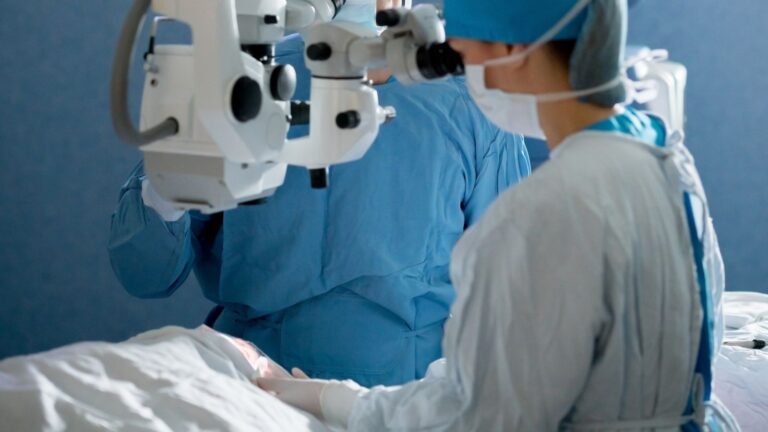
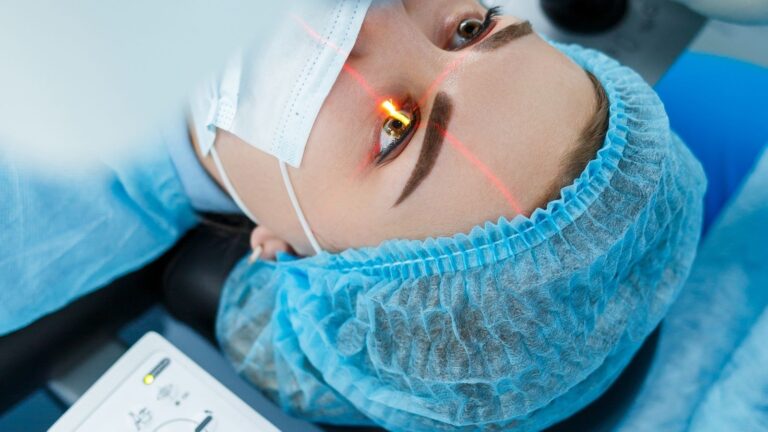
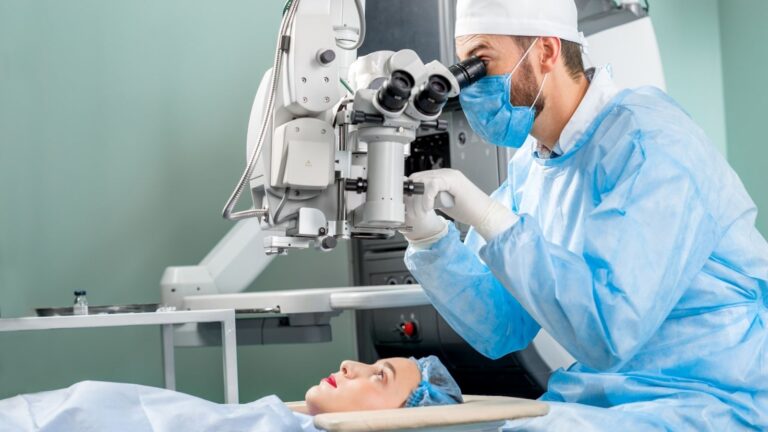
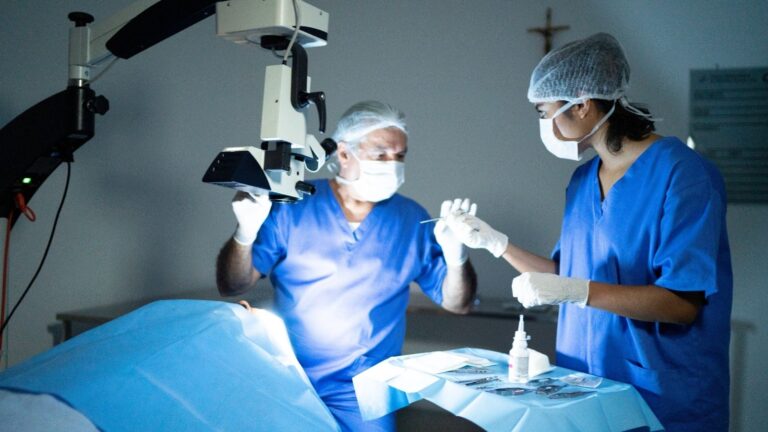
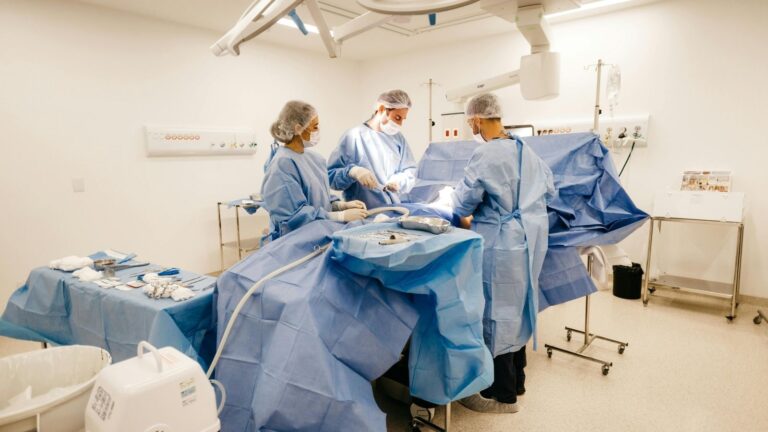
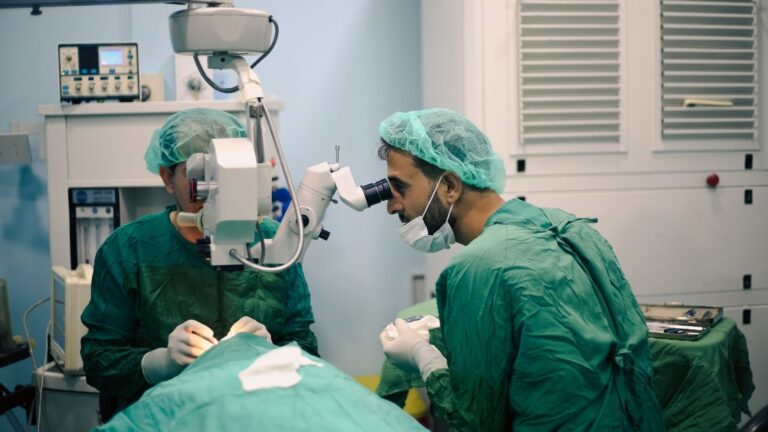
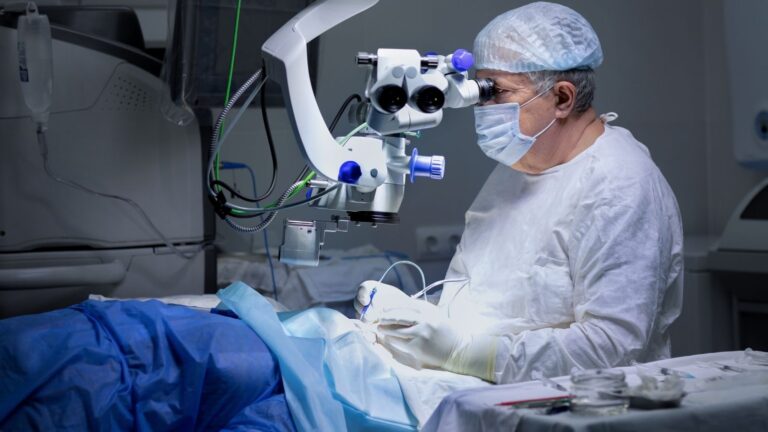
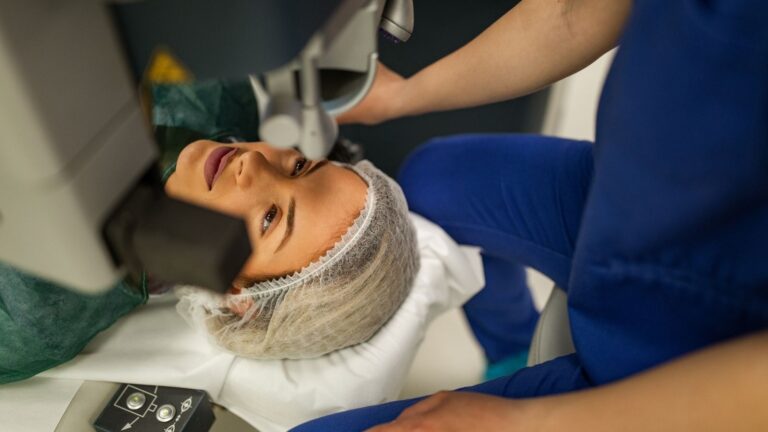
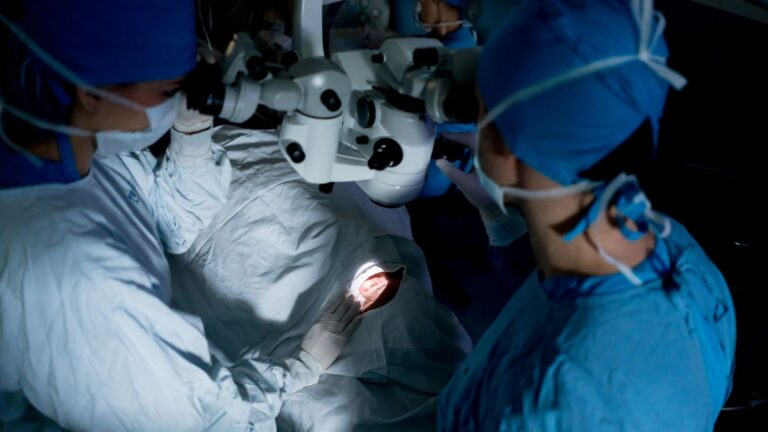
The eye is numbed with drops, and general anaesthesia is usually not needed. Through a small incision in the cornea, the natural lens is broken up with ultrasound and removed, and the foldable new lens is placed through the same incision. The procedure usually takes 15–20 minutes and you go home the same day. The two eyes are usually operated on different days.
Recovery
For most people, vision clears noticeably in the first few days. Full sharpness and adaptation to the new lens can take a few weeks. During this time you need to use your drops without skipping doses, avoid rubbing your eyes and keep water out of them. Returning to desk work is usually quick, but heavy exercise and swimming should wait until the follow-up examination.
Possible risks
- Infection inside the eye (rare, but serious)
- Retinal detachment; the risk is higher in high short-sightedness
- Clouding of the membrane behind the lens over time (treatable with YAG laser)
- Temporary swelling at the centre of the retina and a rise in eye pressure
- Halos and glare at night, especially with multifocal lenses
- Deviation from the target prescription; glasses or an additional correction may be needed
The decision is made after an examination
A detailed examination and measurements show whether RLE is the right option for you. The structure of your eye, your age, your profession and your daily habits are evaluated together. Laser, ICL and RLE options are explained to you with their advantages and disadvantages.