Contents:
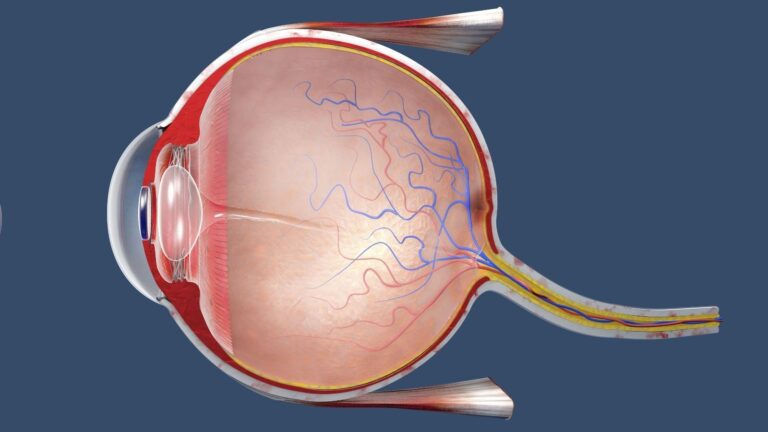
A refractive disorder is a condition in which the eye cannot refract light correctly to form a clear image on the retina. With normal focusing, light passes through the cornea and the natural lens and converges on the retina. A change in the focal point may cause blurred vision at distance, near or both. The length of the eyeball, the curvature of the cornea and the characteristics of the natural lens affect this process.
The terms refractive disorder and refractive error describe the same condition. Refractive errors may occur during childhood or develop or change later in life. A person may have more than one condition at the same time, such as myopia with astigmatism or hyperopia with presbyopia. The appropriate correction method is determined through a comprehensive eye examination and an assessment of the person's daily visual needs.
What Causes a Refractive Disorder?
Refractive disorders result from differences in the optical structure of the eye. An eyeball that is longer or shorter than normal may alter the point at which light focuses on the retina. The corneal surface not having equal curvature along different axes may affect image clarity. Changes in the shape, refractive power and focusing ability of the natural lens may also cause a refractive error.
Genetic characteristics and age-related changes may play a role in the development of refractive errors. Myopia often begins during childhood or adolescence and may continue to change until early adulthood. Presbyopia is associated with the natural lens losing its flexibility with age. Keratoconus, eye injuries or certain previous eye operations may also alter the existing prescription.
What Are the 4 Main Refractive Errors?
Refractive errors are classified according to where light focuses in relation to the retina and the eye's ability to focus. Myopia, hyperopia, astigmatism and presbyopia are the 4 most commonly assessed conditions. Their symptoms and correction options may differ. More than one refractive error may be present in the same person.
What Is Myopia?
Myopia causes distant objects to appear blurred because light focuses in front of the retina. Nearby objects can generally be seen more comfortably. An elongated eyeball or excessive refractive power of the cornea may be associated with myopia. Myopia is shown with minus values on a spectacle prescription.
Children may have difficulty seeing the school board, move closer to the television or squint when looking at distant objects. Myopia usually begins between the ages of 6 and 14 and may progress until early adulthood. Standard glasses and contact lenses correct blurred vision, but not every product slows the progression of myopia. If progression is detected in a child, time spent outdoors and suitable myopia control options may be assessed individually.
What Is Hyperopia?
Hyperopia is a refractive error in which light tends to focus behind the retina when the eye is at rest. Focusing on nearby objects may be particularly difficult. Young people may compensate for low levels of hyperopia for a certain period through the focusing ability of the natural lens. A child or young person with hyperopia may therefore experience eye strain despite seeing clearly at both distance and near.
Headaches, difficulty focusing and discomfort in the eyes may occur after prolonged reading or screen use. Distance vision may also be affected at higher prescriptions. Significant hyperopia or a difference in hyperopia between the two eyes may affect the risk of strabismus and amblyopia in children. Hyperopia is shown with plus values on a spectacle prescription.
What Is Astigmatism?
Astigmatism occurs when the cornea or natural lens cannot focus light equally in different directions. It may cause blurred, shadowed or distorted vision at both distance and near. Difficulty distinguishing letters clearly and the scattering of lights at night are common symptoms. Some people may experience eye strain or headaches after prolonged reading.
Astigmatism may occur together with myopia or hyperopia. It is shown on a spectacle prescription with a cylinder value and axis information. Regular astigmatism can be corrected with glasses, toric contact lenses or surgical methods in suitable patients. In cases of irregular astigmatism, keratoconus or other conditions affecting the corneal surface may need to be investigated.
What Is Presbyopia?
Presbyopia is the age-related loss of flexibility of the natural lens when focusing on nearby objects. It generally becomes more noticeable during the 40s, although the age of onset and severity may vary between individuals. The need to hold a book or phone screen further away is a common symptom. Reading in dim light may become difficult, and eye strain may occur during near work.
People with normal distance vision may also develop a need for reading glasses. A person with myopia may see nearby objects more comfortably after removing their glasses, but this does not mean that presbyopia has not developed. Presbyopia may be managed with glasses, contact lenses or different optical and surgical options in suitable individuals. No method stops the natural ageing of the lens.
What Are the Symptoms of a Refractive Disorder?
The symptoms of refractive errors may vary according to the type and degree of the disorder. Blurred vision at distance or near is one of the most common symptoms. Some people squint to see more clearly. Eye strain and headaches may develop after prolonged reading or screen use.
Lights may appear scattered or images may look shadowed while driving at night. However, similar symptoms may also occur with dry eye, cataracts, retinal diseases and other eye conditions. Sudden changes in vision should not be attributed solely to a change in spectacle prescription. The 7 symptoms that may occur with refractive errors are:
- Blurred vision at distance, near or both.
- Squinting.
- Eye strain while reading or using screens.
- Headaches or discomfort around the eyes.
- Difficulty changing focus between near and far.
- Scattered or shadowed lights at night.
- The need to move books or phone screens closer or further away.
How Is a Refractive Disorder Diagnosed?
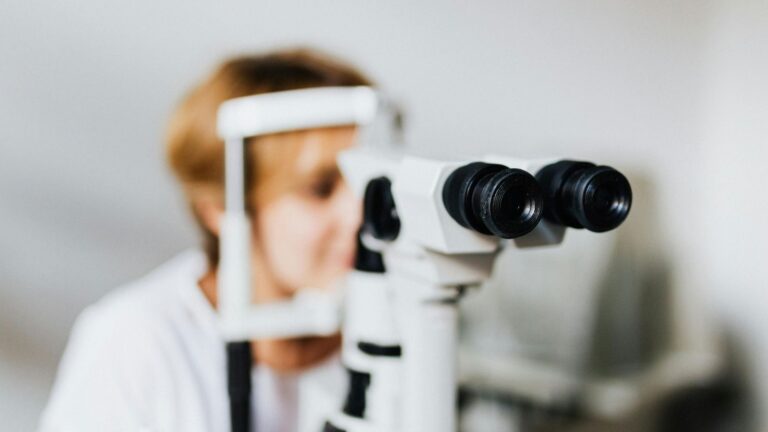
Diagnosis is made through visual acuity testing and a comprehensive eye examination. Automated refractometers may provide an initial measurement of the refractive error. When determining the final spectacle prescription, subjective refraction using different lenses and the person's visual responses are considered. An objective measurement method called retinoscopy may also be used when necessary.
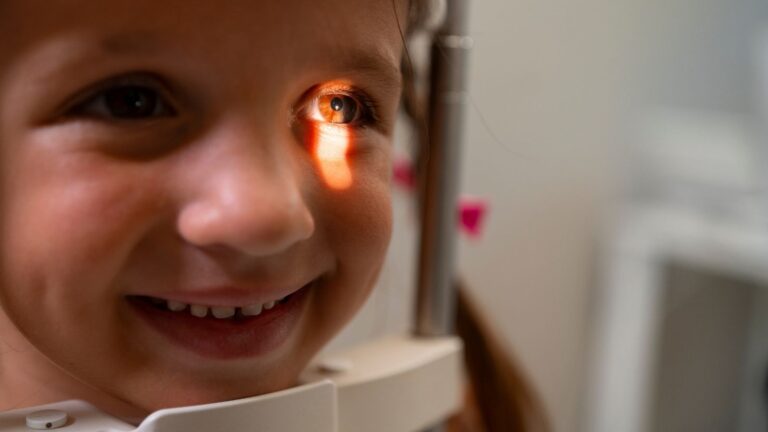
Measurements using eye drops may be required in children, young people and some adults whose focusing ability affects the results. Cycloplegic drops temporarily relax the eye's focusing mechanism and help identify hidden hyperopia more accurately. Blurred vision and sensitivity to light may occur for several hours after the drops are applied. The cornea, natural lens, retina and intraocular pressure are also assessed during the examination.
Even if visual acuity is measured as 20/20 or 6/6, a refractive error or another eye problem cannot be completely ruled out. Young people may compensate for low levels of hyperopia through their focusing ability. How the eyes work together and the individual level of vision in each eye are also important. Treatment decisions are not based solely on the numerical value shown by the device.
How Is a Refractive Disorder Treated?
Treatment of a refractive disorder is planned according to the type and degree of the error, the person's age and their daily visual needs. The aim of treatment is to improve visual clarity by helping light focus more accurately on the retina. Glasses and contact lenses provide optical correction without changing the shape of the eye. Laser or intraocular surgical methods may only be considered following a comprehensive assessment of suitability.
Wearing Glasses
Glasses are a commonly used method of correcting refractive errors and do not come into contact with the eye. The prescription and design of the lenses are determined according to the person's eye measurements. Myopia, hyperopia and astigmatism can be corrected using single-vision lenses. Reading glasses, bifocal lenses or progressive lenses may be considered for presbyopia.
As visual development continues in children, their spectacle prescription may need to be checked at regular intervals. Whether glasses should be worn continuously or only during certain activities is determined according to the type of refractive error and the examination findings. Wearing glasses does not make the eyes lazy or, by itself, cause the prescription to increase. Unsuitable lenses may cause visual discomfort and difficulty adapting.
Wearing Contact Lenses
Contact lenses may be considered as an alternative to glasses in suitable patients. Soft, rigid gas-permeable, toric and multifocal lenses may be used for different refractive errors. Lens selection should be based not only on the prescription but also on the structure of the cornea and the condition of the ocular surface. Dry eye, allergies and eyelid disorders may affect contact lens comfort.
Failure to follow hygiene rules increases the risk of infection and corneal damage. Sleeping in lenses that are not suitable for overnight use, cleaning lenses with tap water or exceeding the recommended replacement period may be harmful. If eye pain, significant redness, sensitivity to light or blurred vision develops, the lenses should be removed and the eye should be assessed. A contact lens prescription is not always the same as a spectacle prescription.
Laser and Surgical Methods
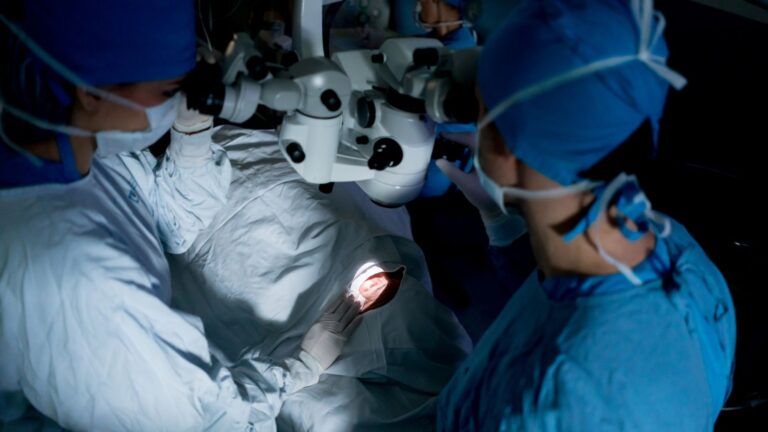
Methods such as LASIK, Femto-LASIK, PRK, TransPRK and SMILE may be considered in suitable patients. These procedures aim to alter the optical structure of the cornea so that light focuses more accurately on the retina. Corneal thickness and topography, the stability of the prescription, the condition of the ocular surface and accompanying diseases are assessed before surgery. Not every patient's eye structure is suitable for laser treatment.
Different options, such as a phakic intraocular lens, may be considered for some people who are not suitable for corneal laser treatment. Refractive lens exchange, in which the natural lens is removed and replaced with an artificial lens, permanently eliminates the eye's focusing ability and carries risks specific to intraocular surgery. A small residual prescription may remain after surgery, glasses may be needed again over time or reading glasses may be required. When assessing these methods, potential benefits, limitations and individual risks should be compared together.
Why Are Refractive Errors Important in Children?
Visual development may be affected when refractive errors in children are not detected early. A significant difference in prescription between the two eyes or a high refractive error may be associated with amblyopia. Hyperopia may accompany inward turning of the eye in some children. Early correction is important for supporting visual development.
Children may not notice or be able to express that their vision is blurred. Moving closer to the television, being unable to see the board, squinting, closing one eye or experiencing difficulties during lessons should be assessed. However, each of these behaviours does not necessarily mean that glasses are required. A follow-up plan is created by assessing measurements taken using eye drops, visual acuity and how the eyes work together.
When Is an Eye Examination Needed?
Assessment should not be delayed if there is a sudden change in vision, newly developed double vision or flashes of light. A severe headache, eye pain, a sudden increase in floaters or a shadow in the field of vision may be associated with different eye conditions. These symptoms should not be regarded as ordinary signs that a new spectacle prescription is required. In contact lens users, eye pain and redness accompanied by blurred vision may also require an examination on the same day.
Children should undergo an eye examination if they have strabismus, one eye sees less than the other or there is a suspected vision-related difficulty at school. Although mild refractive errors do not always require continuous correction, the person's symptoms and visual needs are important. Follow-up intervals are determined according to age, the measured prescription and the rate of change. This content is intended for general information and does not replace an eye examination.