Brow ptosis is the downward displacement of the eyebrow toward the rim of the eye socket over time or because of structural characteristics. It may create a feeling of heaviness that resembles excess upper eyelid skin, make the eye area appear tired, and affect the visual field in some people. However, not every appearance of a "drooping eyelid" is caused by the eyebrow.
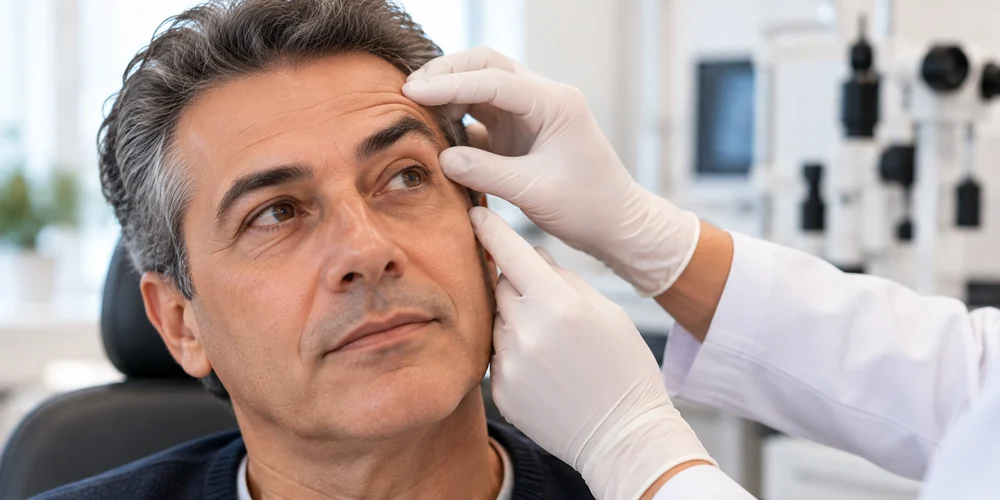
When planning a brow lift, the assessment is not limited to eyebrow height. The eyebrow shape, differences between the two sides, the function of the forehead muscles, hairline, upper eyelid skin, true eyelid ptosis, eyelid closure, and ocular surface must be evaluated together. The aim is not to raise the eyebrow as high as possible, but to place it in a natural and balanced position without changing the person's facial expression.
What Causes Brow Ptosis?
- Loosening of the skin, connective tissue, and forehead support with aging
- A genetically low or straight eyebrow structure
- The balance between the forehead and periocular muscles
- Facial nerve weakness or one-sided brow ptosis
- Trauma, previous surgery, and scar tissue
- Asymmetry becoming more noticeable because of constantly using the forehead muscles to keep the eyes open
⚠️ Emergency Warning: Newly developed one-sided brow ptosis accompanied by facial muscle weakness, speech problems, or another neurological symptom requires urgent medical assessment before it is considered an aesthetic concern.
How Are Brow Ptosis, Eyelid Ptosis, and Excess Skin Distinguished?
- Brow Ptosis: The eyebrow and forehead tissues shift downward. When the eyebrow is manually returned to its natural position, some of the heaviness over the upper eyelid may decrease. Forehead lines may become more prominent because the patient constantly uses the forehead muscles to raise the eyebrows.
- Dermatochalasis (Excess Upper Eyelid Skin): When the eyebrow is in its normal position, the upper eyelid skin folds toward the eyelashes. The main problem involves the eyelid skin and, when necessary, the fat tissue. The treatment is upper blepharoplasty.
- Ptosis (True Eyelid Drooping): In ptosis, the upper eyelid margin sits lower toward the pupil. The levator muscle and its attachments are evaluated. A brow lift alone does not correct the eyelid margin.
What Are the Symptoms of Brow Ptosis?
- A feeling of heaviness and skin accumulation over the upper eyelid
- A facial expression perceived as tired, sad, or angry
- Constant contraction of the forehead to raise the eyebrows and increased forehead lines
- A noticeable difference in height or shape between the eyebrows
- Shadowing of the upper outer visual field in advanced cases
- Reduced makeup space and an asymmetrical appearance around the eyes
What Are the Brow Lift Surgery Techniques?
The surgical technique is not selected solely according to scar length. The degree and location of the drooping, forehead height, hairline, possibility of hair loss, skin thickness, and desired longevity are evaluated together.
Direct Brow Lift: The incision is placed immediately above the upper border of the eyebrow. A controlled amount of skin is removed to lift the eyebrow directly. It provides strong correction, but the scar is located in a visible area close to the eyebrow.
- Temporal or Lateral Brow Lift: This primarily targets the outer section of the eyebrow and the temple tissue. The incision is planned within the scalp or near the hairline.
- Endoscopic Brow and Forehead Lift: A camera is inserted through several small incisions in the scalp. The forehead and eyebrow tissues are released and secured in a higher position. This technique provides shorter incisions.
- Hairline (Pretrichial) and Coronal Approaches: The incision is placed in front of the hairline or within the scalp. These techniques may be preferred to reduce forehead height or provide wider surgical access.
What Are the Non-Surgical Options?
- Botulinum Toxin: It may provide a limited lift, particularly in the outer eyebrow, by temporarily reducing the action of the muscles that pull the eyebrow downward. However, it is not equivalent to a surgical brow lift.
- Fillers and Energy-Based Treatments: These may support volume loss around the temples and eyebrows or aim to achieve limited changes in skin firmness.
- Thread Lift: This may provide a temporary lift, but it should not be presented as an alternative to permanent surgery in cases of significant drooping.
Our Approach to Brow Lift and Brow Ptosis Surgery in Izmir
At our clinic in Izmir, we carefully determine whether the problem originates from the eyebrow, excess upper eyelid skin, or true ptosis when evaluating brow ptosis. We examine the forehead muscles, eyebrow shape, hairline, eyelid closure, and ocular surface together. This helps us avoid approaches that may compromise a natural result, such as removing excess skin only from the upper eyelid or unnecessarily lifting the entire forehead.
The decision between direct, temporal, endoscopic, hairline, or suspension techniques is made according to the person's anatomy. Upper blepharoplasty or ptosis surgery may be added when necessary. Our aim is not to create a standardized eyebrow shape, but to achieve a balanced result that suits the person's face and preserves eye function.