Türkçe
 Deutsch

The overwhelming majority of reviews from people who have undergone strabismus surgery focus on life-changing positive experiences, such as increased self-confidence and social ease. Patients emphasize the psychological transformation even more than the improvement in visual quality. Frequently mentioned complaints are usually manageable conditions that are considered a natural part of the postoperative healing process. The most common of these include temporary redness in the eye, a stinging sensation, and the possibility of partial recurrence of the misalignment in the long term. These are generally experienced as expected and manageable issues.
What Are the Psychological Effects?
The most striking outcomes of strabismus surgery are often observed in the psychological domain. Patients describe this change not merely as an aesthetic improvement, but as the beginning of a new chapter in their lives. The elimination of long-standing social inhibitions and self-confidence problems is the most valuable gain of the surgery for many individuals. Narratives show how powerful this effect can be and how it extends into all areas of life.
The most commonly reported psychological gains distilled from patient experiences are:
- Sudden boost in self-confidence
- Ease in making eye contact
- Noticeable reduction in social anxiety
- Feeling like a “new person”
- Increased comfort in public settings
- Feeling more secure in professional life
Perhaps the most frequently emphasized point among these is the regained ability to make eye contact. For many who have lived with strabismus for years, looking directly into someone’s eyes can be a serious source of anxiety. This issue can complicate many social interactions, from simple conversations to job interviews. Postoperative patients often express immense relief in being able to communicate naturally without this anxiety. This is not merely a change in habit but a restoration of a fundamental human connection.
Scientifically validated quality of life surveys also confirm these personal accounts. Studies reveal statistically significant improvements in psychosocial health following surgery. Interestingly, among patients who had no complaints of double vision and underwent the operation purely for cosmetic or social reasons, these psychosocial improvements were sometimes even more pronounced than functional improvements. This demonstrates that the so-called “cosmetic” aspect of the surgery has a profound impact on mental health and social functionality.
What Functional Improvements in Vision Occur After Surgery?
In addition to psychological relief, strabismus surgery offers very tangible and significant functional benefits that directly affect patients’ daily lives. These gains simultaneously enhance quality of life in multiple areas and change the way patients perceive the world. These improvements are often interconnected, with one positively influencing the other.
The most commonly reported functional improvements by patients are as follows:
- Elimination of double vision
- Improved depth perception
- Enhanced 3D vision
- Reduced eye fatigue
- Relief from headaches caused by strabismus
- Wider visual field
- Reduction in neck pain caused by abnormal head positioning
Among these benefits, the correction of double vision (diplopia) is perhaps the most dramatically life-improving factor. Double vision can make even the most basic activities—such as driving, reading, or walking up and down stairs—dangerous or impossible. Clinical data show that surgery is highly successful in addressing this issue. For example, in a study involving patients aged 80 and above, double vision—their primary complaint before surgery—was completely resolved with a single surgery in 75% of patients, and with additional interventions in 87%. This means regaining life, especially for patients who were previously told, “There’s nothing to be done at your age.”
Another important benefit, the improvement in depth perception (stereopsis), reshapes patients’ interaction with space. After surgery, patients report being better able to judge the distance of objects, which makes tasks like parking a car, playing sports, or simply pouring water into a glass much easier. One parent even noted a sudden and noticeable improvement in their child’s hand-eye coordination just a few hours after the surgery. Such functional improvements can also eliminate compensatory behaviors like abnormal head positioning, thereby relieving chronic neck and shoulder pain.
Do Reviews from People Who Had Strabismus Surgery Differ by Age?
One of the best aspects of strabismus surgery is that the high level of satisfaction it provides is not limited by age. From infancy to individuals in their nineties, patients and their families consistently express satisfaction with the results. This shows that the core benefits of the surgery are universal and that age is not a limiting factor.
In children, assessments naturally rely on parental observations. Parents often report being “excited” about the results and observing tangible changes in their child’s life.
Positive changes noticed by parents include:
- Noticeable improvement in balance
- Enhanced fine motor skills (e.g., holding a pencil, buttoning a shirt)
- Increased confidence in social environments
- More comfortable interactions with peers
- Overall developmental ease and progress
These observations indicate that the surgery not only resolves an eye issue but also removes a barrier in the child’s developmental journey.
Adult patients—especially those who have lived with strabismus for years—often feel deep gratitude and relief. One of the most commonly heard comments from them is, “I wish I had done it years ago.” This statement reflects how valuable it is to regain quality of life that had been delayed. Their accounts are full of enthusiastic expressions such as “I couldn’t believe the result” or “It was the best decision I’ve ever made.”
While older patients may initially feel hesitant about surgery, evidence shows that it is both very safe and highly effective for this age group. It has been reported that even patients in their 80s or 90s have overcome double vision and are “very satisfied” with the outcomes after surgery. These findings are especially important for elderly patients who may have lost hope in the past, proving that it is indeed possible to significantly improve quality of life even in the later stages of life.
What Is the Recovery Process Like After Strabismus Surgery?
One of the most frequently asked questions by patients is about the postoperative recovery process. Patient experiences suggest that this process is generally easier and more manageable than expected. Being informed in advance about what to expect during the recovery phase helps reduce anxiety and gives patients a greater sense of security.
The most commonly expected conditions during the first few days after surgery are:
- Mild to moderate pain or discomfort in the eye
- A stinging sensation like having sand or an eyelash in the eye
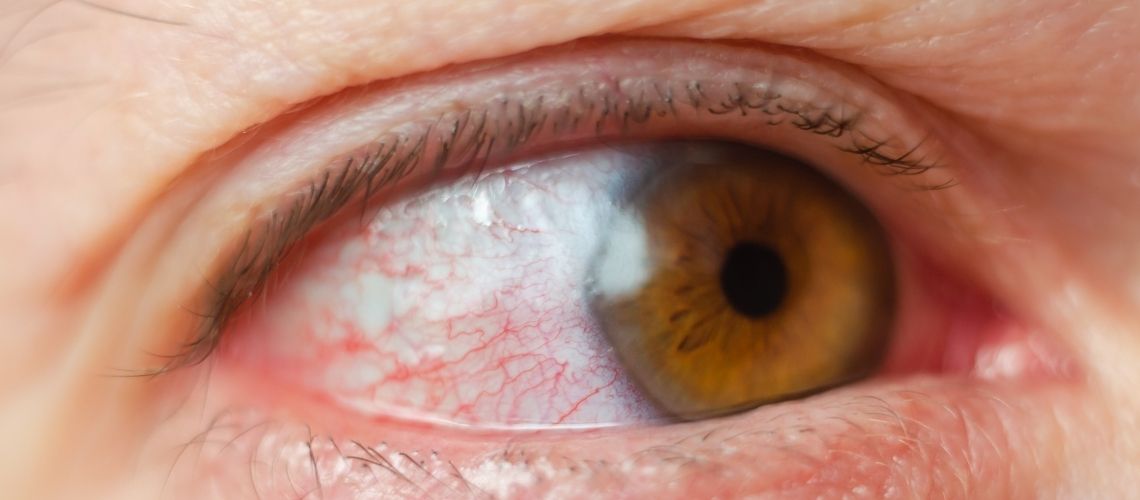
- Bright redness in the white part of the eye (this is a bruise and is harmless)
- Mild swelling in the eyelids
- Temporary blurry vision or double vision
Discomfort during this initial period is usually easily managed with simple painkillers. While the redness in the eye may initially seem concerning, it is completely normal and usually resolves on its own within 2–3 weeks. Temporary blurriness and double vision that occur as the brain adjusts to the new eye position are also natural parts of the healing process and typically improve within a few days to a few weeks.
By the end of the first week, most patients can largely return to their daily routines. Desk jobs can generally be resumed within 1–2 weeks, while more active tasks like driving or sports are typically safe to restart within 3–4 weeks. Most patients express satisfaction with how predictable and more comfortable the recovery process is compared to their expectations.
What Do Reviews Say About the Risk of Misalignment Recurring After Surgery?
The recurrence of misalignment (relapse) over time after surgery is a known possibility and may be more common in certain types of strabismus. However, patients’ attitudes toward this situation generally reflect a mature and accepting perspective. Those who experience recurrence tend to view it not as a “failure” but as part of managing a chronic condition.
The general attitudes and comments of patients who have experienced recurrence are usually as follows:
- No regret about the initial surgery
- Viewing the situation as a natural evolution of the underlying problem
- Satisfaction with the years of improvement provided by the surgery
- A positive outlook on the idea of a “touch-up” or “adjustment” surgery if needed
For example, a patient whose first surgery was effective for 20 years saw the need for a second operation as a natural part of the process when symptoms returned. This viewpoint aligns with the reality that strabismus is a dynamic system involving eye muscles and brain signals. The issue is not that the initial surgery was ineffective, but rather that the body is a living and changing system. Patients who understand this tend to feel less anxious about the possibility of needing a corrective procedure years later. Clinical data also confirm that second procedures are usually minor revisions and again yield excellent results.
What Do Patients Say About the Adjustable Suture Technique?
The adjustable suture technique is an important innovation that enhances patient satisfaction and the precision of results, particularly in adult strabismus surgery. This method allows the surgeon to make a final fine-tuning adjustment to the eye muscle position after the surgery while the patient is awake.
Patients’ experiences with this technique are generally very positive. The main advantages from the patient’s perspective include:
- The most precise possible eye alignment
- Reduced likelihood of needing a second surgery
- A sense of active participation in determining the surgical outcome
- Greater confidence in and satisfaction with the result
Although patients may naturally feel some anxiety before the adjustment, they typically report feeling no pain during the procedure (as the eye is numbed with drops) and afterward often say “it wasn’t anything like I expected.” One of the most interesting aspects of this technique is its psychological effect. It transforms the patient from a passive recipient into an active partner in the surgical outcome. This sense of collaboration can enhance the patient’s confidence in the procedure and their satisfaction with the result.
What Other Complaints Might Arise During Recovery?
During the recovery period, some other commonly encountered and usually easily managed conditions may arise. Being aware of these helps both patient and physician navigate the process more smoothly.
One of these is temporary dry eye symptoms after surgery. This is a common condition that can occur after many types of eye surgery and may affect patient comfort. Possible symptoms include:
- Stinging and burning sensations in the eye
- Redness
- Sensitivity to light
- Occasional blurry vision
These complaints are typically easily relieved with artificial tear drops and usually disappear completely within a few months.
Another important point is the complementary role of vision therapy. In some cases—especially in patients with long-standing strabismus—even if the eyes are mechanically perfectly aligned after surgery, the brain may struggle to use both eyes together. This does not mean the surgery has failed. At this point, vision therapy—a kind of physical therapy for the eyes—helps the brain adapt to the new alignment and learn to fuse the images from both eyes. Vision therapy should be seen not as a remedy for a deficiency but as a tool to maximize the excellent surgical result functionally.
What Do Reviews and Data Say About Factors Affecting Satisfaction After Surgery?
A patient’s satisfaction with surgery is not only related to how well the eyes appear aligned but also closely tied to their preoperative expectations and motivations. Scientific studies show that patients’ expectations before surgery directly influence their satisfaction with the outcome.
For example, patients can be divided into two main groups.
The first group consists of patients whose main complaint is double vision. For these patients, surgical success is measured by functional gains. Their greatest sources of satisfaction after surgery include:
- Being able to drive comfortably
- Reading books without difficulty
- Performing daily tasks without worrying about double vision
- Relief from head and neck pain
The second group includes patients who do not experience double vision but undergo surgery for aesthetic and psychosocial reasons. For them, success is measured by changes in social life and emotional well-being. The most valued benefits among this group include:
- Being able to make eye contact comfortably
- Increased self-confidence
- Greater ease in social settings
- No longer feeling anxious when taking photos
This distinction demonstrates how both motivations are valid and important. For one group, strabismus surgery is a functional necessity; for the other, it fulfills a social and psychological need. Ultimately, both groups report extremely high satisfaction with the surgery when expectations are appropriately managed. Contrary to the misconception that the surgery is “purely cosmetic,” data prove that psychosocial improvement is just as valuable and measurable as functional improvement.