Türkçe
 Deutsch


Multifocal intraocular lenses (MFIOLs) aim to improve visual quality by providing patients with clear vision at different distances. Used especially in cataract and refractive surgeries, these lenses direct light to various focal points, making it possible to see at near, intermediate, and far distances. However, in some cases, unwanted visual effects such as halos and glare can occur.
Nevertheless, trifocal and extended depth of focus (EDOF) lenses help minimize such effects and optimize visual performance. MFIOLs aim to facilitate patients’ daily lives by reducing the need for glasses.
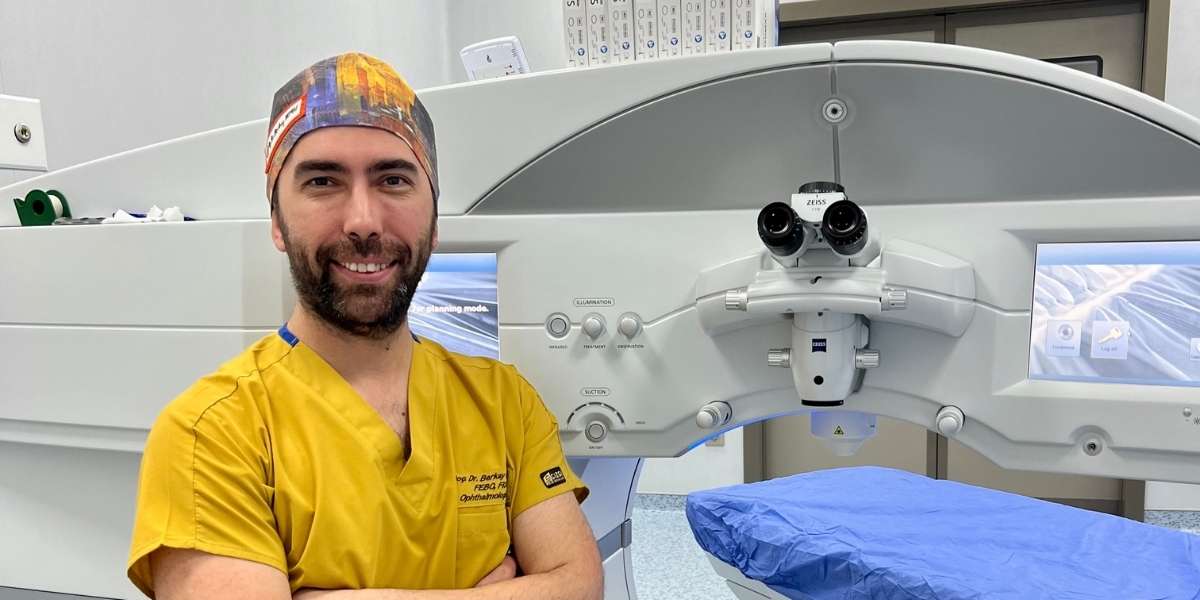
Turkey is one of the best country for Multifocal Intraocular Lens (MFIOL) at a afforable price. If you are looking for a place for Multifocal Intraocular Lens (MFIOL) abroad with best clinics and doctors, you are definitly on the right spot. Check Dr. Berkay Akmaz's Multifocal Intraocular Lens (MFIOL) prices, reviews and packages.
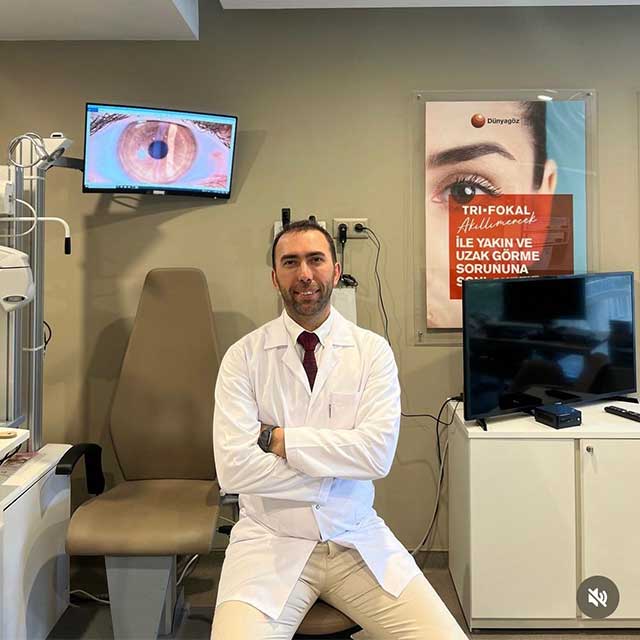
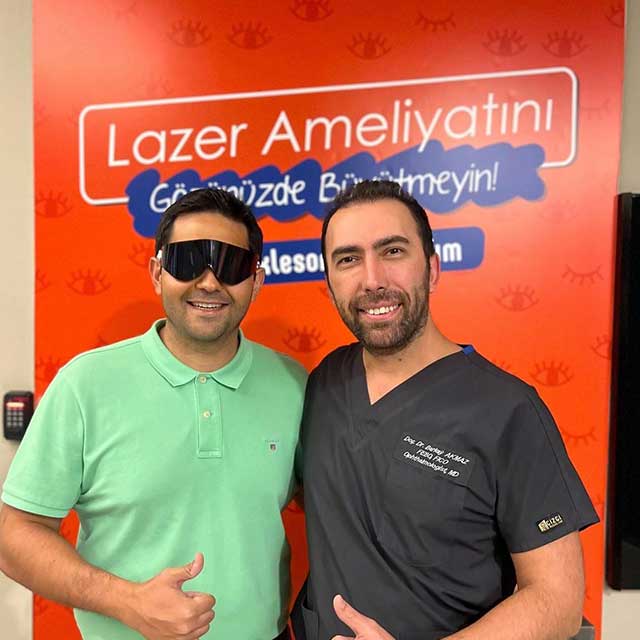
Ophthalmology Specialist – Assoc. Prof. Dr. Berkay Akmaz was born in İzmir in 1985. Due to his father's profession, he spent his primary school years in different cities. He began his education at Gülhane Military Medical Academy in 2003 and graduated with the title of Medical Doctor from Ege University Faculty of Medicine in 2010. In 2010, Assoc. Prof. Dr. Berkay Akmaz ranked 25th in the Medical Specialization Exam (TUS) in Turkey and started his specialization in the Department of Ophthalmology and Surgery at Dr. Lütfi Kırdar Kartal Education and Research Hospital. He completed his specialization training in 2014.






What is a Multifocal Intraocular Lens?
Multifocal intraocular lenses (MFIOLs) are special lenses implanted in the eye during cataract surgery. These lenses aim to reduce the need for glasses by providing patients with clear vision at far, intermediate, and near distances. The technology for multifocal lenses, which began to be developed in the 1980s, received FDA approval in 2005.
In subsequent years, new models were also approved, and developments in the field of ophthalmology accelerated. These lenses enhance patients’ visual quality while also reducing dependence on glasses in daily life. Today, MFIOLs are frequently preferred in cataract surgery and play an important role in solutions for eye health.
What Are the Types of Multifocal Intraocular Lenses?
Multifocal intraocular lenses provide clear vision at near, intermediate, and far distances, and are implanted either after cataract surgery or for refractive purposes. With advancing technology, various multifocal lens designs have been developed to meet different visual needs. The main types include:
- Bifocal Lenses: Provide focus for near and distance vision; offer limited intermediate vision.
- Trifocal Lenses: Deliver clear vision at near, intermediate, and far distances, enhancing daily visual comfort.
- Diffractive Multifocal Lenses: Split incoming light into different focal points; may cause mild nighttime glare or halos.
- Refractive Multifocal Lenses: Use ring-shaped refractive zones to direct light; distribute light differently compared to diffractive lenses.
- Toric Multifocal Lenses: Multifocal lenses designed to correct astigmatism.
- EDOF (Extended Depth of Focus) Lenses: Provide an extended range of clear vision, offering significant advantages especially at intermediate distances.
How Does a Multifocal Intraocular Lens Work?
The working principle of multifocal intraocular lenses (MFIOLs) is based on directing light to different focal points to provide patients with clear vision at near and far distances. These lenses manipulate light in various ways using different optical designs, thus providing multifocality. MFIOLs are mainly composed of diffractive, refractive, and hybrid designs, and each design offers specific visual performance.
Diffractive MFIOLs:
- Use concentric rings to split incoming light into multiple focal points.
- Contain microstructures on the lens surface that direct light to near and far focal points.
- These lenses distribute light for near, intermediate, and far vision as bifocal or trifocal.
- However, they may create visual disturbances like decreased light efficiency and halos and glare in low-light conditions.
Refractive MFIOLs:
- Feature multiple zones on their surfaces with different refractive powers.
- These zones are typically arranged concentrically, each optimized for a specific focal point.
- Light is refracted to different distances depending on the area aligned with the pupil.
- They offer more customized focal points based on pupil size but are sensitive to pupil dilation.
Hybrid MFIOLs:
- Aim to enhance image quality at multiple distances by combining diffractive and refractive elements.
- Hybrid designs optimize light distribution and improve visual performance by reducing aberrations.
- These lenses increase adaptability to different lighting conditions and reduce the occurrence of dysphotopsia symptoms.
Extended Depth of Focus (EDOF) MFIOLs:
- Use phase profiles that extend the focal range as a subtype of multifocal lenses.
- Provide a continuous focal range, especially suitable for intermediate distances.
- EDOF lenses offer smoother transitions by reducing light splitting compared to traditional lenses.
- They also minimize visual artifacts like halos and glare, providing comfortable vision across different distances.
When is a Multifocal Intraocular Lens Used?
Multifocal Intraocular Lenses (MFIOLs) are a preferred treatment method to correct specific eye conditions and increase independence from glasses. These lenses are widely used to provide clear vision after cataract surgery and to reduce the need for glasses. Patients who undergo cataract surgery can have a broader range of vision with MFIOLs to minimize or completely eliminate the use of glasses post-surgery.
However, MFIOLs are used not only in cataract treatment but also to correct presbyopia, known as age-related near vision loss. These lenses aim to restore near and intermediate vision for patients who need reading glasses due to presbyopia. Additionally, some types of MFIOLs offer suitable options for patients with mild to moderate astigmatism thanks to their toric features.
MFIOLs can also be implanted in patients who have previously undergone laser treatments like LASIK or PRK to correct refractive errors. If these patients require multifocal vision after cataract surgery, MFIOLs can be used to enhance visual performance. However, patients with high-degree aberrations should be carefully evaluated.
Another criterion to consider in the use of these lenses is the patient’s retinal health and macular condition. Patients without serious macular disorders like advanced macular degeneration and who are in good eye health can benefit from MFIOL implantation.
Who is Not Suitable for a Multifocal Intraocular Lens?
Multifocal intraocular lenses (MFIOLs) may not be suitable for certain patient groups. Various ocular conditions, pupil abnormalities, lifestyle factors, and specific systemic diseases are seen as limiting factors for the use of these lenses. In such cases, MFIOLs may not provide the desired results and can lead to dissatisfaction among patients.
Ocular Conditions:
- Macular Diseases: Individuals with serious macular issues like advanced macular degeneration or retinitis pigmentosa cannot benefit from MFIOLs. These patients may not adapt to the multiple focal points of the lenses due to central vision distortions.
- Retinal Problems: Retinal diseases like diabetic retinopathy and macular edema can lead to decreased contrast sensitivity and increased risk of postoperative complications.
- Glaucoma: MFIOLs may not be suitable for glaucoma patients with advanced optic nerve damage due to decreased contrast sensitivity and limited visual fields.
- Corneal Irregularities and Astigmatism: In patients with high astigmatism or high-degree aberrations, these lenses may cause visual discomfort. Previous surgeries like LASIK or PRK can also lead to poor performance.
Pupil Abnormalities:
- Pupil Size and Shape: Large pupils can cause light scattering and halos at night, while small pupils make it difficult to provide clear vision at different distances.
- Zonular Weakness: It is important for the lens to remain stable. Zonular instability can create issues in lens placement and reduce visual quality.
Lifestyle Considerations:
- Night Vision and Visual Demands: MFIOLs may be unsuitable for those with high visual needs in low-light conditions like night driving.
- Unrealistic Expectations: Excessively high expectations regarding independence from glasses can lead to dissatisfaction with lens use.
Other Systemic Conditions:
- Neurological Disorders: Cognitive dysfunctions like Alzheimer’s or Parkinson’s disease can limit the ability to adapt to the multiple focal points of the lenses.
How is a Multifocal Intraocular Lens Applied?
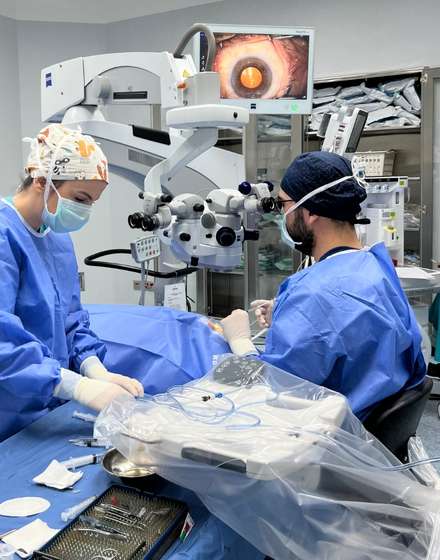
The implantation of a multifocal intraocular lens (MFIOL) is a complex procedure performed during cataract surgery and requires meticulous planning for optimal results. Preoperative evaluation is the first and important step in this process. The ophthalmologist conducts a comprehensive eye examination to assess the patient’s suitability for MFIOLs.
In this examination, patients who desire independence from glasses, have generally good eye health, and have mild astigmatism are selected. Individuals with corneal or macular diseases are typically not among MFIOL candidates as they may experience issues with contrast sensitivity. Additionally, the ophthalmologist evaluates the patient’s tolerance to visual aberrations such as glare and halos.
During the surgical planning phase, the correct lens selection is made. MFIOLs are available in diffractive, refractive, or hybrid designs, and each type is chosen according to the patient’s visual needs. For example:
- Diffractive lenses: Use a concentric ring design to provide clear vision at near and far distances.
- Refractive lenses: Are specially designed to enhance visual quality at intermediate distances.
- Hybrid lenses: Reduce chromatic aberration and provide clear vision with less light interference over a wide range of distances.
What are the Side Effects of a Multifocal Intraocular Lens?
The use of multifocal intraocular lenses can be associated with some visual side effects and complications. These lenses, which split light into multiple focal points, can cause visual discomfort in some patients. The most commonly encountered side effect among these is dysphotopsia. Dysphotopsia includes visual phenomena such as glare, halos, and starbursts. Halos can be particularly bothersome in low-light conditions and are seen as rings of light around light sources like street lamps. These visual events are more pronounced in diffractive lenses and can negatively affect low-light activities like night driving.
In addition, multifocal lenses can lead to a decrease in contrast sensitivity. This makes it difficult to distinguish objects from their backgrounds in dim light. Patients with corneal abnormalities or those who have previously undergone refractive surgery may be more affected by reduced contrast sensitivity. In these patients, the decrease in contrast sensitivity can lead to a reduction in visual performance.
Moreover, decentration and tilt occurring during or after surgery can also affect optical quality. Incorrect placement of MFIOLs leads to blurred or distorted vision. Such complications may require repositioning of the lens. Studies indicate that decentrations greater than 0.7 mm can significantly impair visual outcomes.
Another side effect is known as residual refractive errors. Patients with MFIOLs may experience issues like astigmatism due to incorrect lens power calculations or postoperative changes in the eye. Astigmatism can reduce visual acuity, necessitating corrective procedures or the use of glasses.
How Successful is a Multifocal Intraocular Lens?
The success rates of multifocal intraocular lenses (MFIOLs) are generally high, offering an effective solution to increase independence from glasses for patients. These lenses, which provide significant improvements in both distant and near vision, considerably reduce the need for glasses after surgery. Various studies examine the success and efficacy of MFIOLs from different perspectives.
Firstly, MFIOLs enhance visual acuity at different distances. They show high success, especially in terms of uncorrected distance visual acuity (UDVA) and uncorrected intermediate visual acuity (UIVA). Studies show that a large portion of eyes with implanted lenses achieve 20/25 or better distance vision and 20/32 or better intermediate vision. These results confirm that MFIOLs are effective over a wider field of vision compared to monofocal lenses.
The rate of independence from glasses among MFIOL users is quite high, and this rate may vary depending on the MFIOL model used. In most studies, independence from glasses is reported to be between 70% and 90%. This rate is significantly higher compared to patients using monofocal lenses who need glasses for near tasks. Achieving independence from glasses positively affects patients’ quality of life and makes living without glasses easier.
- Patient Satisfaction: The majority of MFIOL users report high satisfaction. Satisfaction rates are generally over 80%. Newer lens types like trifocals offer seamless transitions between focal distances, further increasing these rates. However, some patients may experience visual discomfort due to glare and halos that the lenses may cause. These side effects can affect patient satisfaction, and it is observed that these discomforts often decrease as patients adapt to the lenses.
- Visual Disturbances: Despite high success rates, some patients report issues like glare, halos, and decreased contrast sensitivity at a rate of 10-20%. These symptoms are usually temporary and decrease as patients adapt to the lenses. However, in some cases where patients may experience permanent discomfort, lens exchange may be necessary.
How to Prepare for a Multifocal Intraocular Lens?
Preparing for multifocal intraocular lens (MFIOL) surgery requires various careful steps, and meticulous evaluations should be made during this process. These steps are vital for achieving optimal results before, during, and after surgery.
- Patient Selection and Counseling: Suitable candidates are patients with healthy eye structures, minimal astigmatism, and a desire for a life without glasses. Those with hyperopia or presbyopia issues will benefit most from MFIOLs. However, patients who have previously undergone refractive surgery or have issues like corneal pathologies carry a higher risk of dysphotopsia. Therefore, it is important to inform patients about postoperative visual side effects, especially halos and glare, and to set realistic expectations.
- Preoperative Measurements: Accurate biometric measurements are indispensable for achieving the targeted refractive outcome. Advanced formulas like optical biometry and Barrett’s Universal II should be used for this purpose. Additionally, measurements like preoperative keratometry and corneal topography help accurately assess corneal curvature and existing astigmatism. Evaluating the angle kappa is also important to minimize potential photic phenomena.
- Management of Pre-existing Conditions: Existing conditions like dry eye or ocular surface disease should be treated before surgery; otherwise, they can affect postoperative visual quality. Individuals who have previously undergone refractive surgery require special evaluation for changes in corneal topography and decreased contrast sensitivity. Cases of corneal scarring or pterygium should be identified and treated with accurate astigmatism measurements.
- Surgical Planning and Technique: MFIOL surgery requires careful surgical technique. Proper placement of the lens into the capsular bag is vital to ensure correct alignment of the lens. When toric MFIOLs are involved, postoperative alignment checks are necessary to correct astigmatism.
How Should Postoperative Care Be After a Multifocal Intraocular Lens?
The care process following the implantation of a Multifocal Intraocular Lens (MFIOL) is crucial for optimizing recovery and visual outcomes. Patients should carefully follow all steps recommended by their doctors. First, medication use should be done meticulously. A treatment plan consisting of antibiotic, anti-inflammatory, and lubricating eye drops is prescribed. These drops aim to prevent infection, reduce inflammation, and manage dry eye symptoms. Eye drops should be applied according to a tapering schedule specified by the doctor over the prescribed period.
Additionally, limiting activities is an important factor in the recovery process. Patients are advised to avoid heavy lifting, bending, and strenuous physical activities for the first one to two weeks. This precaution aims to prevent an increase in intraocular pressure. At the same time, activities like swimming and using a jacuzzi should be avoided to reduce the risk of infection.
Eye protection is another important step in the recovery process. Wearing a protective shield over the eye while sleeping after surgery prevents accidental rubbing or pressure. It is recommended to use sunglasses outdoors; this reduces light sensitivity and alleviates glare that may occur in the eye after MFIOL implantation.
Regular follow-up appointments are also of great importance to monitor the recovery process. During these appointments, the doctor evaluates the patient’s eye health and checks the IOL position. At the same time, they assess the patient’s visual acuity and monitor any residual refractive errors or signs of visual discomfort. Typically, patients are checked within the first 24-48 hours after surgery, then after one week, and subsequently at specific intervals.
Finally, managing visual discomforts is a matter that requires attention. Photic phenomena like halos or glare can occur in low-light conditions. These symptoms can be alleviated with optical coatings or special glasses. In such cases, adjusting lighting can reduce discomforts.
How Does Resistance Develop Against a Multifocal Intraocular Lens?
Resistance to multifocal intraocular lenses develops due to various factors arising from the eye’s physiological responses and the optical design of the lenses. First, neuroadaptation processes can pose a significant barrier for patients. The brain trying to process images at different distances simultaneously can create difficulties, especially in older individuals. Since this adaptation process is unnatural and energy-intensive, feelings of fatigue and discomfort may occur. As a result, a decrease in visual quality and patient dissatisfaction may be observed.
Secondly, optical aberrations and dysphotopsias play an important role in the formation of resistance. Due to the multifocal design of the lens, light is split and diffracted into various focal points. This leads to the emergence of unwanted visual effects like halos, glare, and other disturbances. The decrease in contrast sensitivity, especially in low-light conditions, negatively affects patients’ visual performance. Additionally, optical aberrations like coma and large angle kappa can further intensify these symptoms.
Thirdly, decentration or tilt of the lens after surgery triggers the development of resistance. The lens not being in the ideal position prevents light from being distributed equally and correctly to the focal points. Thus, even slight decentrations can lead to increased dysphotopsias and visual discomfort. This issue is more commonly seen in myopic eyes due to anatomical differences.
Fourthly, residual ametropia and postoperative refractive errors are among the causes of resistance. Even small refractive errors occurring after surgery can reduce patients’ visual quality. When accurate preoperative measurements and calculations are not made, additional corrective lenses may be needed. This situation contradicts the goal of achieving independence from glasses and reduces patient satisfaction.
Finally, dry eye and ocular surface irregularities are also effective in the development of resistance. Postoperative dry eye syndrome can be more severe in patients using multifocal lenses. A disrupted tear film can hinder the transmission of light, causing dysphotopsias to intensify. Failure to treat dry eye contributes to visual fluctuations and discomfort, increasing resistance.
How much does a Multifocal Intraocular Lens (MFIOL) cost in Turkey?
A Multifocal Intraocular Lens (MFIOL) cost in Turkey is between €3,000 – €3,500.
Multifocal Intraocular Lens (MFIOL) Reviews
Recent Posts

Dermatochalasis (Eyelid Sagging)
Anasayfa » Eyelid » Dermatochalasis (Eyelid Sagging)Dermatochalasis (eyelid sagging) is a condition caused by excess [...]
Read MoreMar

Congenital Cataract
Anasayfa » Cataract » Congenital CataractCongenital cataract is an eye disease that occurs when the [...]
Read MoreMar

Causes of Blurred Vision in One Eye
Anasayfa » Eye Health » Causes of Blurred Vision in One EyeThe causes of blurred [...]
Read MoreDec

Comments from Patients with Pseudotumor Cerebri
Anasayfa » Uncategorized » Comments from Patients with Pseudotumor CerebriComments from patients with pseudotumor cerebri [...]
Read MoreDec

Reviews of People Who Have Undergone Corneal Surgery
Anasayfa » Eye Health » Reviews of People Who Have Undergone Corneal SurgeryReviews from people [...]
Read MoreDec
Keratoconus Patient Reviews
Anasayfa » Eye Health » Keratoconus Patient ReviewsKeratoconus patient reviews provide important insights into the [...]
Read MoreDec

How Long Does Cataract Surgery Take?
Anasayfa » Cataract » How Long Does Cataract Surgery Take?The answer to the question of [...]
Read MoreDec

How Do Under-Eye Dark Circles Go Away?
Anasayfa » Uncategorized » How Do Under-Eye Dark Circles Go Away?The question of how under-eye [...]
Read MoreDec
Gallery