Türkçe
 Deutsch


Tear duct system diseases are caused by blockages in the tear drainage pathways and typically manifest as excessive watering and swelling in the eye. Conditions such as dacryocystitis and nasolacrimal duct obstruction arise due to infections, congenital defects, or age-related narrowing. However, such issues in tear drainage can lead to serious complications like chronic infections and inflammations.
Treatment options include methods such as antibiotics, tear duct probing, and balloon dilation. In severe cases, dacryocystorhinostomy (DCR) surgery may be necessary to provide a permanent solution.
Turkey is one of the best country for Tear System Diseases Treatment at a afforable price. If you are looking for a place for Tear System Diseases Treatment abroad with best clinics and doctors, you are definitly on the right spot. Check Dr. Berkay Akmaz's Tear System Diseases Treatment prices, reviews and packages.
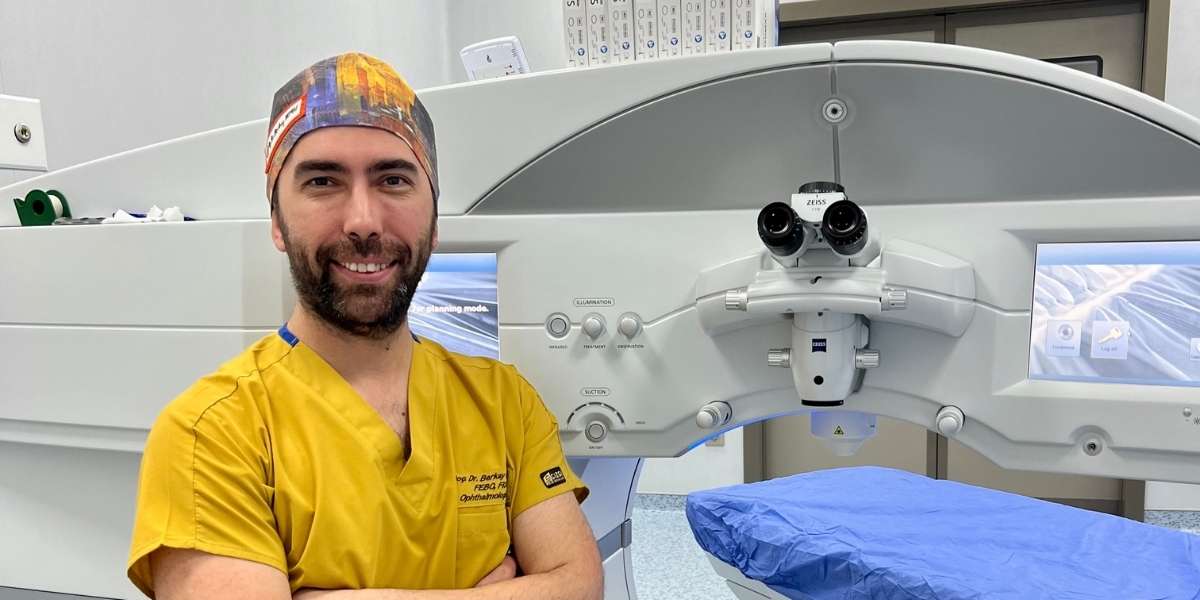
Ophthalmology Specialist – Assoc. Prof. Dr. Berkay Akmaz was born in İzmir in 1985. Due to his father's profession, he spent his primary school years in different cities. He began his education at Gülhane Military Medical Academy in 2003 and graduated with the title of Medical Doctor from Ege University Faculty of Medicine in 2010. In 2010, Assoc. Prof. Dr. Berkay Akmaz ranked 25th in the Medical Specialization Exam (TUS) in Turkey and started his specialization in the Department of Ophthalmology and Surgery at Dr. Lütfi Kırdar Kartal Education and Research Hospital. He completed his specialization training in 2014.






What Are Tear Duct Disorders?
Tear duct system disorders occur as a result of blockages in the tear drainage system, preventing tears from being drained normally. These blockages usually form in the nasolacrimal duct and manifest with symptoms such as watery eyes, swelling, and mucus or pus discharge.
Congenital anomalies, infections, traumas, and age-related changes are common causes of tear duct system disorders. Additionally, due to the blockage, the risk of inflammation and recurring infections in the eye increases. Treatment methods start with massage techniques in mild cases and include different interventions depending on the severity of the blockage. However, more comprehensive procedures may be necessary in advanced situations. Various treatments are applied to restore tear drainage.
What Are the Treatment Types for Tear System Disorders?
Tear system disorders occur when the eyes do not produce enough tears or when tears do not drain properly from the eye surface. Dry eye, tear duct obstruction, and infections fall into this category. Treatment is planned based on the underlying cause. The main treatment options include:
- Artificial Tear Drops and Gels: The first-line treatment for dry eye.
- Punctal Plugs: Help tears stay on the eye surface for a longer time.
- Immunosuppressive Eye Drops: Used when there is inflammation on the ocular surface.
- Warm Compress and Eyelid Hygiene: Applied to improve tear gland function.
- Tear Duct Opening Surgery (Dacryocystorhinostomy – DCR): Performed to create a new drainage pathway in tear duct blockages.
- Endoscopic or Laser DCR Techniques: Less invasive and more modern surgical approaches.
- Antibiotic or Antiviral Treatments: Used locally or systemically in infection-related conditions.
What Are the Causes of Tear Duct Disorders?
Different causes of tear duct disorders can lead to blockages in tear drainage, causing various symptoms. These blockages have many different sources, such as congenital problems, aging processes, infections, trauma, and tumors. Below are the main factors that can cause tear duct blockages:
- Most babies are born with a blockage due to the underdevelopment of the tear duct or a membrane blocking the exit of the nasolacrimal duct. However, this situation usually resolves on its own in the first few months.
- As we age, the openings called puncta in tear drainage can narrow. This narrowing can lead to problems in tear drainage in elderly individuals and cause tear duct blockage.
- Inflammations in or around the eye can cause scarring or swelling in the tear ducts. This hinders tear flow and paves the way for recurring infections.
- Physical blows to the nose or around the eye can damage the tear drainage pathways. This damage can block the tear duct due to bone fractures or scar tissue.
- Growths in the sinuses or tear duct can exert pressure on the tear drainage system, causing blockages.
- Long-term use of eye drops used in glaucoma treatment can affect the tear ducts. Additionally, radiation applied to the head and neck area in cancer patients can lead to structural changes in the tear ducts.
How Common Are Tear Duct Disorders?
Tear duct system disorders, especially conditions like nasolacrimal duct obstruction (NLDO) and dacryocystitis, become more common with age. These ailments, which are more frequently seen in individuals over the age of 40, pose a higher risk in women. Particularly women in the post-menopausal period are in the high-risk group for nasolacrimal duct obstruction.
It is known that NLDO is also common in children, and congenital nasolacrimal duct obstruction is seen in newborns. Approximately 6–20% of babies are affected by this condition, and the majority of cases resolve spontaneously in the first year of life. However, nasolacrimal duct disorders that occur in adults are usually based on causes such as infection, trauma, or inflammation and lead to chronic problems.
Additionally, the occurrence of conditions like dry eye syndrome along with NLDO is a common situation. Dry eye syndrome is observed at different rates according to age groups and commonly appears in individuals with nasolacrimal duct dysfunction.
Some findings regarding the prevalence of tear duct disorders are as follows:
- PANDO, that is, Primary Acquired Nasolacrimal Duct Obstruction, is more commonly seen in individuals over 40 years old and mostly in women.
- 30% of women aged 50 and over undergo surgical treatment due to NLDO.
- The prevalence of dry eye varies between 11.4% and 27.2% depending on age and is associated with NLDO.
How Do Tear Duct Disorders Develop?
The development process of tear duct system disorders can be explained through various mechanisms. Firstly, congenital blockages occur due to the improper development of the tear drainage system and are a problem frequently seen in babies. This blockage usually results from the membrane located at the end part of the duct not fully opening, leading to tears not being drained normally. As a result, tear accumulation, watery eyes, and increased risk of infection occur in babies.
Additionally, narrowing can occur in the tear ducts with aging. As age progresses, the tear drainage openings called puncta narrow, negatively affecting tear flow. This situation is associated with tissue degeneration and scarring, causing tears to accumulate in the eye.
Moreover, chronic inflammations can also negatively affect the tear drainage system. Inflammations resulting from infections like conjunctivitis or sinusitis lead to scarring in the system. This scarring hinders the proper flow of tears while increasing the risk of recurring infections. In advanced cases, the inflammation spreads to the lacrimal sac, leading to more severe symptoms.
Additionally, traumas and surgical interventions can damage the tear drainage system. Physical traumas occurring on the face or surgical procedures performed around the nose and eyes can damage the sensitive structures in the system. Such situations lead to scarring in the ducts, making tear flow difficult.
On the other hand, tumors that form near or within the tear drainage system can block tear flow when they occur. Tumors exert pressure on the system, causing blockages, and this leads to issues like watering and swelling in the eye.
Finally, some medications can lead to blockages in the tear duct. Especially drugs used in glaucoma treatment or therapies like chemotherapy can cause inflammation in the tear drainage system.
What Are the Symptoms of Tear Duct Disorders?
Tear duct disorders, especially ailments like blocked tear ducts and associated infections, manifest with various symptoms. These symptoms occur due to improper tear drainage and usually affect the daily life comfort of patients. These symptoms include:
- Persistent tearing or watery eyes is one of the most common symptoms. Since tears cannot be effectively drained, they may run down the cheeks.
- Blocked tear ducts often lead to redness and irritation in the eye. Accumulated tears can cause a sensation of pain or irritation in the eye.
- Blocked ducts can cause mucus or pus to accumulate in the corners of the eyes or along the eyelashes. This situation especially manifests as crust formation after sleep.
- In some cases, swelling and tenderness may be observed in an area near the inner corner of the eye. In infections like dacryocystitis, a visibly swollen area or abscess formation in the lacrimal sac region is possible.
- Overflowing tears and swelling in the surrounding tissues can lead to blurred vision problems in some patients.
- In acute infections like dacryocystitis, the feeling of pain may increase. Swelling may be accompanied by fever, and a feeling of discomfort in the eye may occur.
- Stagnant tears can lead to recurring infections like conjunctivitis.
How Are Tear Duct Disorders Diagnosed?
The diagnosis of tear duct system disorders is carried out using various methods that evaluate tear production and drainage. Firstly, in a clinical examination, the slit-lamp examination helps determine drainage problems by examining the height of the tear meniscus. The fluorescein dye disappearance test is used to observe tear drainage; retention of dye in the eye indicates a blockage. Additionally, palpation over the lacrimal sac is performed to assess signs of infection or blockage.
Additional diagnostic methods include lacrimal probing and irrigation. In this procedure, a small instrument inserted into the tear duct checks for blockages in the canal. If the discharge of the saline solution is delayed or reflux occurs, the presence of a blockage is confirmed. Imaging techniques, especially dacryocystography and dacryoscintigraphy, play a critical role in determining the location of blockages in the tear drainage system. Dacryocystography provides detailed X-ray images with contrast material, while dacryoscintigraphy allows monitoring of drainage with a radioactive substance.
Also, the Schirmer test, known as the tear production test, is used to measure the amount of tears. In this test, tear production is evaluated using filter paper placed under the lower eyelid. Endoscopic examination allows detailed inspection of the nasal cavity in more complex cases.
How Are Tear Duct Disorders Treated?
In treating tear duct system disorders, various methods are used considering the patient’s age, condition, and the cause of the blockage. These treatment methods are grouped as conservative, procedural, and surgical approaches.
Conservative Treatment:
- Massage: A special massage technique is applied to relieve tear duct blockage in babies. This method can be effective in the first year of babies.
- Antibiotics: If an infection is present, the infection is controlled with antibiotic eye drops or antibiotics given orally.
Procedural Treatments:
- Dilation, Probing, and Irrigation: In cases where massage is insufficient, a probe and saline solution are used to widen the tear duct and eliminate the blockage. It is effective in both babies and adults.
- Balloon Catheter Dilation: When the probing method is insufficient, a balloon catheter is used to open the tear duct. This method is beneficial in partial blockages.
- Stenting or Intubation: Stents or tubes are placed to keep the canal open and prevent re-blockage.
Surgical Treatment:
- External DCR: This method is one of the most effective options in severe blockages.
- Endonasal DCR: Another treatment option applied with endoscopic instruments without making an external incision.
What Are the Risk Factors for Tear Duct Disorders?
Tear duct system disorders can originate from various risk factors due to age, trauma, or certain diseases. These risk factors can lead to blockages in the tear drainage system and affect different age groups. Particularly aging, congenital structural anomalies, chronic infections, facial traumas, and some medical treatments are among the main causes of these disorders. The risk factors can be detailed as follows:
- Age-Related Changes: As people age, the tear drainage system naturally narrows, increasing the tendency for tear duct disorders in elderly individuals. This situation can raise the risk of blockage in the puncta.
- Congenital Blockages: Congenital nasolacrimal duct obstruction, commonly seen in babies, occurs due to the incomplete development of the tear ducts. Especially premature babies are at higher risk due to underdeveloped tear ducts.
- Chronic Inflammation or Infections: Prolonged inflammations or recurring infections affecting the tear ducts can lead to blockages by forming scar tissue in the drainage pathways.
- Facial Trauma or Surgeries: Injuries occurring on the face or nose can cause damage to the tear drainage system. Additionally, after surgeries on the nose, eyelids, or sinuses, the canal system can be disrupted due to scarring.
- Tumors: Tumors that can exert pressure on the tear drainage pathways may cause blockages in this area. This situation hinders tear drainage, leading to dysfunction.
- Medical Treatments: Some medications like anti-glaucoma eye drops can increase the risk of tear duct blockage. Additionally, treatments like chemotherapy and radiation, especially when applied to the head or facial area, can damage the tear drainage pathways, posing a risk.
When Can Treatment for Tear Duct Disorders Be Performed?
The treatment of tear duct system disorders varies depending on the underlying cause, severity of the condition, and the patient’s age. In the first stage, conservative treatment methods are frequently preferred and are quite effective, especially in babies. Tear duct blockages in babies usually resolve spontaneously within the first year. During this process, applications such as nasolacrimal duct massage, warm compresses, and antibiotic eye drops can be performed.
If conservative treatment is ineffective, minimal invasive procedures come into play:
- Dilation, Probing, and Irrigation: These methods are used to open blocked tear ducts in children. In the probing procedure, a thin probe is placed into the canal, and saline irrigation is performed to eliminate the blockage.
- Balloon Catheter Dilation: This method, used in children and adults, involves inflating a balloon to open narrowed canals. It is quite effective in canals narrowed due to scarring or inflammation.
If conservative and minimal invasive treatments fail, surgical options are considered:
- Dacryocystorhinostomy (DCR): It is the most frequently preferred surgical method for blocked tear ducts in adults. A new passage is provided between the lacrimal sac and the nasal cavity.
- Stenting or Silicone Intubation: Silicone tubes are placed to keep new or existing canals open and are removed once the healing process is complete.
Finally, in blockages caused by tumors, trauma, or long-term medication use, treatment focuses on the removal of the tumor or management of the underlying condition.
When Is Treatment for Tear Duct Disorders Not Possible?
The surgical treatment of tear duct disorders cannot be applied in some cases because certain factors may endanger patient safety. These contraindications include active infections, blood disorders, severe nasal or sinus diseases, medication allergies, advanced age, poor general health condition, tumors causing the blockage, and congenital anatomical variations. Performing surgery under these conditions can bring serious risks of complications.
The main contraindications are:
- If there are active infections like dacryocystitis, the surgery should be postponed as it may negatively affect the healing process.
- In patients with bleeding disorders or who have received anticoagulant therapy, preoperative evaluation is essential.
- Chronic sinusitis or large nasal polyps can make healing difficult and should be treated first.
- In patients with severe medication allergies, precautions should be taken, especially if local anesthesia will be applied.
- In elderly patients and those with serious comorbidities who cannot tolerate anesthesia, non-surgical solutions should be considered.
- If the tear duct blockage is caused by a tumor, tumor treatment should be considered.
- Structural variations in children make surgical intervention difficult and require special treatment.
What Is the Recovery Process After Treatment for Tear Duct Disorders?
The postoperative recovery process includes steps that need to be carefully followed to achieve a successful outcome and minimize complications. In the initial postoperative care, patients may experience mild pain; this condition is usually controlled with over-the-counter pain relievers. Swelling and bruising that may occur around the eye can be reduced by applying ice to the affected area for 15–20 minutes several times a day.
To prevent the risk of infection, antibiotic eye drops or nasal sprays are usually used for a month. Additionally, the doctor may prescribe steroids or nasal decongestants to relieve discomfort in the nasal area.
Postoperative activity restrictions include:
- Avoid bending, heavy lifting, or exercising for one week.
- Strenuous activities are not recommended until full recovery, as they can negatively affect the healing process.
- Full exercise can be resumed after two weeks.
However, driving is allowed the day after surgery as long as non-opioid pain relievers are given. In follow-up care, it is crucial for the patient to continue regular check-ups. Through endoscopic examinations to be performed in the weeks following surgery, it is confirmed that the tear drainage system is functioning properly and that accumulated blood in the nasal passages has been cleaned. These check-ups help in early detection of undesirable conditions like scar tissue or granuloma and allow for quick intervention.
How Can Tear Duct Disorders Be Prevented?
The prevention of tear duct system disorders is possible through both regular eye hygiene practices and management of risk factors. Regular cleaning of the eye area with warm water and a clean cloth helps prevent the accumulation of bacteria that can lead to blockages and infections. Additionally, rapid treatment of chronic sinus or eye infections is important to prevent tear duct blockages.
Managing risk factors is quite critical to protect the tear drainage system. Precautions that can be taken in this context are:
- Avoiding traumas that can damage the tear system
- Limiting exposure to factors like smoke or pollution that can increase eye inflammation
- Regular eye doctor visits for those with conditions like chronic eye inflammation
Some medications can reduce tear production, disrupting tear functions. Avoiding uncontrolled use of these medications and using them under doctor supervision is important for preserving the health of the tear system. For babies with congenital nasolacrimal duct obstruction, gentle massage applied to the lacrimal sac can help open the blockage and prevent infections.
Dry eye syndrome can be a harbinger of tear duct disorders. It is recommended that individuals whose tear production decreases due to aging or medication use maintain tear film stability by using artificial tears. In this way, the healthy functioning of the tear system is supported.
Recent Posts

Dermatochalasis (Eyelid Sagging)
Anasayfa » Eyelid » Dermatochalasis (Eyelid Sagging)Dermatochalasis (eyelid sagging) is a condition caused by excess [...]
Read MoreMar

Congenital Cataract
Anasayfa » Cataract » Congenital CataractCongenital cataract is an eye disease that occurs when the [...]
Read MoreMar

Causes of Blurred Vision in One Eye
Anasayfa » Eye Health » Causes of Blurred Vision in One EyeThe causes of blurred [...]
Read MoreDec

Comments from Patients with Pseudotumor Cerebri
Anasayfa » Uncategorized » Comments from Patients with Pseudotumor CerebriComments from patients with pseudotumor cerebri [...]
Read MoreDec

Reviews of People Who Have Undergone Corneal Surgery
Anasayfa » Eye Health » Reviews of People Who Have Undergone Corneal SurgeryReviews from people [...]
Read MoreDec
Keratoconus Patient Reviews
Anasayfa » Eye Health » Keratoconus Patient ReviewsKeratoconus patient reviews provide important insights into the [...]
Read MoreDec

How Long Does Cataract Surgery Take?
Anasayfa » Cataract » How Long Does Cataract Surgery Take?The answer to the question of [...]
Read MoreDec

How Do Under-Eye Dark Circles Go Away?
Anasayfa » Uncategorized » How Do Under-Eye Dark Circles Go Away?The question of how under-eye [...]
Read MoreDec
Gallery