Türkçe
 Deutsch


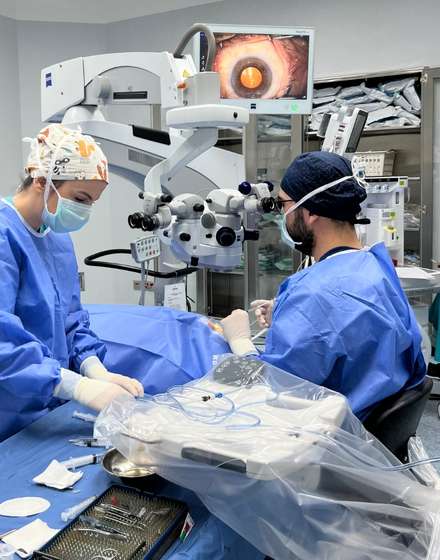
In keratoconus treatments, the aim is to strengthen the structure of the cornea and improve visual acuity. Especially Corneal Cross-Linking (CXL) and Intrastromal Corneal Ring Segments (ICRS) stand out for this purpose. CXL strengthens the cornea with riboflavin and UV-A rays and also slows the progression of the disease.
On the other hand, ICRS regulates the shape of the cornea with synthetic rings placed inside the cornea. Of these two methods, CXL is used to stop the progression of keratoconus, while ICRS is used to improve visual quality. With both CXL and ICRS, the cornea stabilizes and visual ability improves.
Turkey is one of the best country for Keratoconus Treatments (CXL, Ring Applications) at a afforable price. If you are looking for a place for Keratoconus Treatments (CXL, Ring Applications) abroad with best clinics and doctors, you are definitly on the right spot. Check Dr. Berkay Akmaz's Keratoconus Treatments (CXL, Ring Applications) prices, reviews and packages.
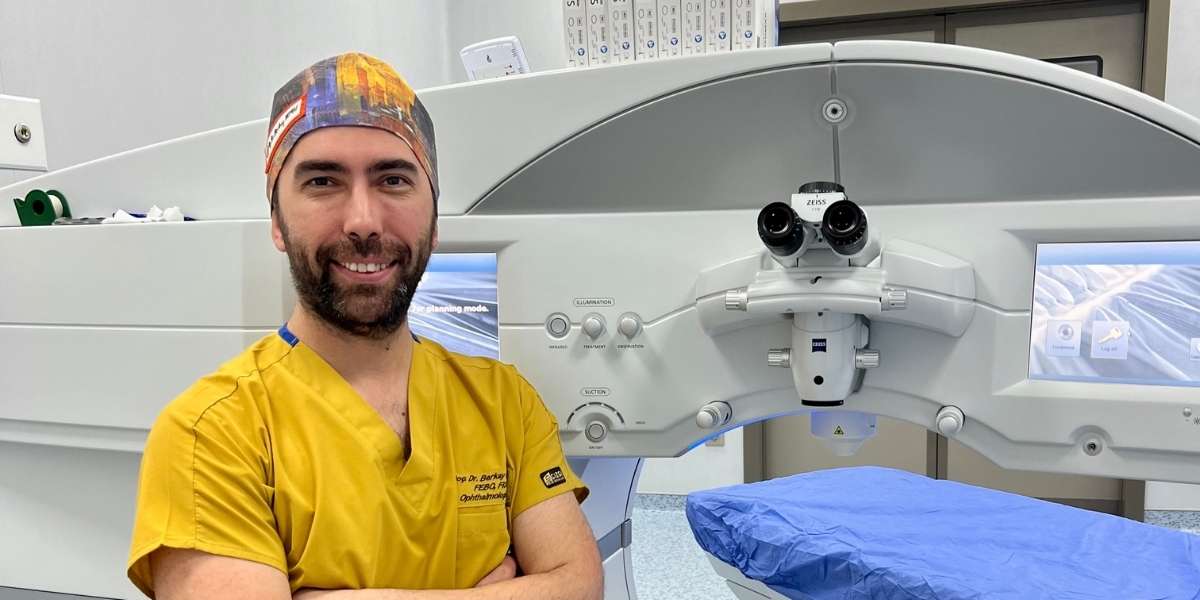
Ophthalmology Specialist – Assoc. Prof. Dr. Berkay Akmaz was born in İzmir in 1985. Due to his father's profession, he spent his primary school years in different cities. He began his education at Gülhane Military Medical Academy in 2003 and graduated with the title of Medical Doctor from Ege University Faculty of Medicine in 2010. In 2010, Assoc. Prof. Dr. Berkay Akmaz ranked 25th in the Medical Specialization Exam (TUS) in Turkey and started his specialization in the Department of Ophthalmology and Surgery at Dr. Lütfi Kırdar Kartal Education and Research Hospital. He completed his specialization training in 2014.






What Are Keratoconus Treatments?
Various methods are used in keratoconus treatments to increase the structural stability of the cornea. Chief among these is corneal collagen cross-linking (CXL). CXL aims to halt the progression of the disease by strengthening the collagen fibers of the cornea, and this application received FDA approval in 2016. Ring applications were developed to reduce distortions by correcting the shape of the cornea.
Both methods aim to reduce the patient’s vision loss and also minimize the need for corneal transplantation. As a result, CXL and ring applications are important treatment options to enhance the quality of life of keratoconus patients and support visual function by stabilizing the cornea.
What Are the Types of Keratoconus Surgery?
Keratoconus is a progressive eye disorder in which the cornea thins and protrudes forward, forming a cone-like shape. Treatment is planned according to the stage of the disease, and surgical options aim to strengthen, reshape, or replace the cornea when necessary. The main types of keratoconus surgery include:
- Corneal Collagen Cross-Linking: UV light and riboflavin are used to strengthen the cornea and halt disease progression.
- Intrastromal Ring Segments (ICRS): Semi-circular rings are implanted into the cornea to improve its shape and enhance visual quality.
- Topography-Guided PRK: Laser reshaping of the cornea, often combined with cross-linking.
- Phakic Intraocular Lens (ICL): Refractive errors are corrected by implanting a lens inside the eye without altering the cornea.
- Corneal Transplant (Penetrating or Lamellar Keratoplasty): In advanced keratoconus, the damaged corneal tissue is partially or fully replaced.
How Do Keratoconus Treatments Work?
Corneal Cross-Linking (CXL) and Intrastromal Corneal Ring Segments (ICRS) work with different mechanisms of action in the treatment of keratoconus. First, CXL focuses on strengthening the structure by creating new bonds between collagen fibers in the cornea.
This procedure, performed using riboflavin and UVA light, increases the stiffness of the cornea, preventing deformation. In addition, positive cellular changes such as a decrease in oxidative stress and an increase in collagen biosynthesis are observed with CXL application. While cell death occurs during this process, the cornea renews itself thanks to the migration of new keratocytes.
ICRS, on the other hand, is a treatment aiming to correct the shape of the cornea by placing ring segments into the corneal stroma. These segments make the corneal surface flatter and reduce the cone-shaped curvature. They also improve refractive errors such as astigmatism and myopia, providing rapid improvement in patients’ visual acuity. Although ICRS does not provide biomechanical strengthening like CXL, it gives structural support to the cornea. This treatment does not stop the progression of keratoconus; however, when combined with CXL, it increases stabilization.
When Are Keratoconus Treatments Used?
The keratoconus treatments of Corneal Cross-Linking (CXL) and Intrastromal Corneal Ring Segments (ICRS) are selected according to the progression level of the disease. Firstly, CXL aims to stop the progression of the disease in cases where progressive keratoconus is present. Especially in young patients, CXL is preferred if the cornea has sufficient thickness. Since a minimum thickness of 400 microns is sought during treatment, support is provided to thin corneas using special techniques.
On the other hand, ICRS is used to increase visual acuity in patients who feel discomfort when using contact lenses or cannot achieve adequate correction with glasses. The situations in which ICRS will be applied are generally preferred in corneas with sufficient thickness in the mild and moderate stages of the disease. In addition, keeping the central cornea clear is another factor that increases success.
Indications for CXL are as follows:
- Observation of signs of keratoconus progression
- Patients who are younger in age
- Minimal corneal scarring
- Sufficient corneal thickness (minimum 400 microns)
Indications for ICRS are as follows:
- Mild to moderate keratoconus stage
- Contact lens intolerance
- Clear central cornea
- Need to regularize refractive values
Who Is Not Suitable for Keratoconus Treatments?
Corneal Cross-Linking (CXL) and Intracorneal Ring Segments (ICRS) treatments are not suitable for every patient. There are certain contraindications in these treatments, and in some cases, they may not be applied. The conditions unsuitable for Corneal Cross-Linking (CXL) are as follows:
- Corneal thickness: CXL should not be applied to patients with a corneal thickness less than 400 µm. Thin corneas carry the risk of UV light reaching the deeper layers of the eye and causing damage.
- Corneal scarring: Patients with advanced corneal scarring are not suitable candidates for CXL. In this case, the procedure may be insufficient to maintain the structural integrity of the cornea.
- Severe dry eye disease: CXL is not recommended in individuals with advanced dry eye disease. Otherwise, the procedure may exacerbate these problems on the ocular surface and negatively affect healing.
- History of Herpes Simplex Virus: Patients with a history of HSV keratitis should avoid CXL due to the risk of reactivating the virus.
- Autoimmune diseases: Inflammatory diseases such as rheumatoid arthritis may complicate the healing process after CXL and increase the risk of complications.
- Pregnancy: Since hormonal changes can affect corneal stability, CXL should be postponed during pregnancy.
There are also certain contraindications in Intracorneal Ring Segments (ICRS) treatment:
- Corneal thickness: It is recommended that the corneal thickness be at least 400 µm in the area where the ring will be placed.
- Corneal scarring and opacities: Opacities and significant scarring in the implantation area may jeopardize the safety of the procedure.
- Advanced keratoconus: ICRS is not recommended in cases of keratoconus Grade IV or higher, as it may be ineffective.
- Active ocular surface disease: Conditions such as infections and keratitis are contraindications for ICRS.
- Glaucoma: The procedure may become more complicated in individuals with high intraocular pressure.
How Are Keratoconus Treatments Applied?
Keratoconus treatments include various methods to halt the progression of the disease and improve visual quality. One of the most common methods, Corneal Cross-Linking (CXL), stands out with its two main application types:
- Epi-off CXL (Dresden Protocol): In this method, the epithelium, which is the outer layer of the cornea, is removed. Thus, riboflavin penetrates deeper. After riboflavin drops are applied, ultraviolet rays are used. However, since the epithelium is removed, the healing process is slower, and the risk of infection is higher.
- Epi-on CXL: It aims to reduce the risk of infection by preserving the epithelium. Techniques such as iontophoresis are used to absorb riboflavin into the cornea. This method is safer and has a shorter healing time. But in some cases, it may not be as effective as epi-off CXL.
Both CXL methods aim to halt the progression of the disease. In addition, new protocols are being developed to shorten the procedure time. Especially accelerated CXL aims to provide effective results in a shorter time.
Intrastromal Corneal Ring Segments (ICRS) are another frequently used method in keratoconus treatment. This procedure helps to reshape the cornea by placing small rings into the cornea. ICRS is generally preferred in cases where contact lenses are insufficient and stabilizes the cornea. When necessary, the rings can be adjusted or removed. Especially when combined with CXL, ICRS both reduces corneal bulging and supports vision.
What Are the Side Effects of Keratoconus Treatments?
The side effects of keratoconus treatments vary depending on the method applied. Corneal Collagen Cross-Linking (CXL) and Intrastromal Corneal Ring Segments (ICRS) procedures each have their own risks and side effects. The epi-off CXL technique is performed by removing the epithelium, and during this process, some common side effects may occur. After treatment applied with this method, patients may experience the following discomforts:
- Pain and discomfort: Since the epithelium is removed, significant discomfort may be felt during the healing process.
- Corneal haze: Temporary haze is common, but if it becomes permanent, visual problems may arise.
- Risk of infection: Removal of the epithelium, though rare, can lead to corneal infection.
- Delayed epithelial healing: Epithelial healing may take a long time, which can lead to complications such as keratolysis.
- Corneal scarring: If healing is impaired, scarring may occur, which can reduce visual quality.
- UV-A related complications: There is a low risk of damage to the deep corneal layers, but it exists.
In the epi-on CXL technique, since the epithelium is not removed, the risk of infection and discomfort is reduced, but in some cases, it may not be as effective as epi-off CXL. The side effects that may be experienced after epi-on CXL application are as follows:
- Lower effectiveness: An intact epithelium may hinder riboflavin absorption, which can reduce the strength of the treatment.
- Mild discomfort: Although less discomfort is felt since the epithelium is not removed, some patients may still encounter this complaint.
The ICRS procedure is performed by placing rings into the cornea, and the side effects of this treatment are different. The complications that may be experienced after ICRS are as follows:
- Segment migration: The ring may shift from its place, affecting the desired outcome and may require intervention.
- Ring extrusion: The ring may come out, in which case a feeling of discomfort occurs, and removal may be necessary.
- Infection: Since the ring is a foreign body, it rarely poses a risk of infection.
- Overlying stromal melt: It is a serious condition and may lead to advanced treatments such as corneal transplantation.
- Glare and halos: Visual discomforts such as glare and halos around light sources at night may be experienced.
- Long-term stability: Complications may develop years later, so continuous follow-up is required.
How Successful Are Keratoconus Treatments?
The success rates of keratoconus treatments are quite remarkable in terms of their ability to halt the course of the disease and improve visual outcomes. The Corneal Cross-Linking (CXL) treatment stands out with its rate of halting disease progression. Especially when applied with the Dresden protocol, successful results are obtained in 90% of cases.
CXL provides shape changes in the cornea and improvements in visual acuity in the long term. Many patients experience improvement in visual acuity in the years following treatment, and flattening is observed in keratometry. This situation supports patients in achieving a clearer quality of vision in their daily lives.
On the other hand, Intracorneal Ring Segments (ICRS) show different success rates according to the patient’s degree of keratoconus. Especially when applied in severe cases (Grade IV and Plus), significant improvements in visual acuity are achieved in about 85% of patients. In addition, decreases in high-degree aberrations are observed. ICRS provides at least a two-diopter reduction in spherical equivalent measurements and positive changes in corneal shape. However, in mild keratoconus cases (Grade I), visual improvements remain more limited, and in some cases, there may be a loss of corrected vision lines.
How to Prepare for Keratoconus Treatments?
Before the application of Corneal Collagen Cross-Linking (CXL) and intrastromal ring segment (ICRS) implantation used in keratoconus treatments, a detailed preparation process is carried out. These preparation stages are necessary to ensure that both procedures are applied successfully and safely. First, in CXL preparation, corneal thickness is evaluated.
A minimum thickness of 400 µm is required for standard procedures; thinner corneas are made suitable for treatment with hypo-osmolar riboflavin solutions. Then, riboflavin application ensures the protection of corneal layers. The application takes about 30 minutes, and after riboflavin fully penetrates, the strengthening process is initiated with UV-A light.
For ICRS preparation, corneal mapping is a critical step. This mapping process is performed to determine the most appropriate placement of the rings and helps identify the steepest areas of the cornea. Then, the selection of appropriate segments is carried out. Factors such as corneal thickness and severity of keratoconus are considered during segment selection. Procedure planning is done using mechanical methods or femtosecond laser to create the channels where the segments will be placed.
How Should Post-Treatment Care Be After Keratoconus Treatments?
Post-treatment care after keratoconus treatment is important to achieve optimal results and support the healing process. After Corneal Cross-Linking (CXL) and Intrastromal Corneal Ring Segments (ICRS) procedures, certain care measures are applied to reduce the risk of infection and increase patient comfort.
Post-Corneal Cross-Linking (CXL) Care:
- First few days: Antibiotic and anti-inflammatory drops are used to minimize the risk of infection and inflammation. Steroid drops are also usually prescribed to control inflammation.
- Pain management: Pain is common after CXL, so NSAIDs, pain relievers, and cold compresses are recommended. Pain usually peaks in the first 48 hours.
- Contact lens: A bandage contact lens is used for a few days after surgery to support epithelial healing. It is usually removed after 3–5 days.
First Month:
- Regular follow-up: Regular check-ups with an ophthalmologist are conducted throughout the first month to monitor healing. During this process, topical steroids are gradually reduced against the risk of inflammation and infection.
- Activity restrictions: Eye rubbing, heavy lifting, and intense physical activities should be avoided. Also, wearing sunglasses outdoors minimizes exposure to UV rays.
Post-Intrastromal Corneal Ring Segments (ICRS) Care:
- First days after surgery: Antibiotic and anti-inflammatory drops are used to prevent infection. Although pain after ICRS is usually milder, oral pain relievers are recommended for discomfort.
- Contact lens: The use of a soft bandage contact lens is recommended for a few days to protect the cornea and accelerate healing. This lens is usually removed after 3–7 days.
Follow-up and Long-Term Care:
- Regular check-ups: Regular eye examinations should be conducted to monitor corneal stability and evaluate progression. Corneal shape and healing process are closely monitored with corneal topography.
- Visual rehabilitation: After CXL and ICRS procedures, some patients may need to use glasses or special lenses to improve visual quality. Better vision can be achieved with rigid gas permeable or scleral lenses.
How Does Resistance to Keratoconus Treatments Develop?
The development of resistance to keratoconus treatments can be explained by the combination of different biological and mechanical factors. The resistance mechanisms observed especially in CXL and ICRS methods are the result of certain limitations of both methods.
Resistance to Corneal Cross-Linking (CXL):
- Inconsistent Cross-Linking Depth: The effectiveness of CXL depends on how deeply UVA light can penetrate the corneal tissue. In cases with thin corneal structure, the treatment may not reach sufficient depth, rendering the cross-linking process insufficient. Especially in the weakest parts of the cornea, the treatment may become ineffective.
- Oxidative Stress and Oxygen Depletion: CXL requires reactive oxygen species for the strengthening of collagen fibers. However, in cases where oxygen is insufficient, cross-link formation may remain limited, reducing the effectiveness of the treatment. This deficiency may lead to treatment insufficiency in regions where keratoconus is severe.
- Enzymatic Resistance and Proteolytic Activity: In advanced keratoconus cases, intense activity of proteolytic enzymes breaks down collagen fibers more rapidly. Although CXL makes the cornea more resistant to these enzymes, in some cases, increased enzyme activity may overshadow the effect of the treatment.
Resistance to Intrastromal Corneal Ring Segments (ICRS):
- Biomechanical Limitations: The effectiveness of ICRS depends on individual differences in corneal structure. In cases with highly irregular astigmatism or advanced ectasia, ring segments may not sufficiently correct the corneal shape and cannot halt the progression of keratoconus.
- Corneal Scarring and Healing Responses: In some patients, excessive healing response developing around the ring segments causes scarring. This condition limits the ability of the rings to reshape the cornea and may even require removal of the rings.
- Infection and Rejection: Although rare, in some cases, foreign body rejection or infection may develop, weakening the effectiveness of ICRS. In cases of infection or rejection, the inability of the ring segments to adapt to the cornea may affect the success of the treatment.
Recent Posts

Dermatochalasis (Eyelid Sagging)
Anasayfa » Eyelid » Dermatochalasis (Eyelid Sagging)Dermatochalasis (eyelid sagging) is a condition caused by excess [...]
Read MoreMar

Congenital Cataract
Anasayfa » Cataract » Congenital CataractCongenital cataract is an eye disease that occurs when the [...]
Read MoreMar

Causes of Blurred Vision in One Eye
Anasayfa » Eye Health » Causes of Blurred Vision in One EyeThe causes of blurred [...]
Read MoreDec

Comments from Patients with Pseudotumor Cerebri
Anasayfa » Uncategorized » Comments from Patients with Pseudotumor CerebriComments from patients with pseudotumor cerebri [...]
Read MoreDec

Reviews of People Who Have Undergone Corneal Surgery
Anasayfa » Eye Health » Reviews of People Who Have Undergone Corneal SurgeryReviews from people [...]
Read MoreDec

Keratoconus Patient Reviews
Anasayfa » Eye Health » Keratoconus Patient ReviewsKeratoconus patient reviews provide important insights into the [...]
Read MoreDec

How Long Does Cataract Surgery Take?
Anasayfa » Cataract » How Long Does Cataract Surgery Take?The answer to the question of [...]
Read MoreDec

How Do Under-Eye Dark Circles Go Away?
Anasayfa » Uncategorized » How Do Under-Eye Dark Circles Go Away?The question of how under-eye [...]
Read MoreDec
Gallery