Türkçe
 Deutsch


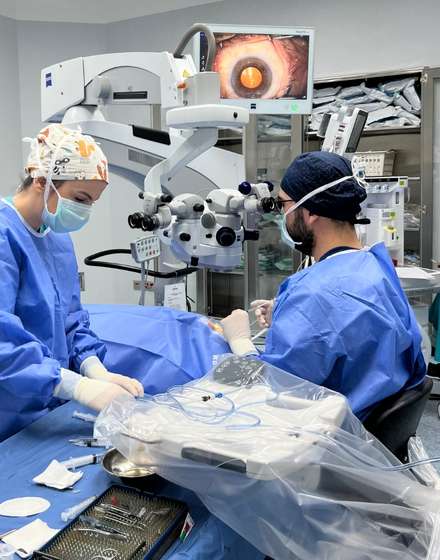
Different methods are applied in the treatment of eye disorders, and these methods are shaped according to the individual’s needs. The most commonly used treatment options for refractive errors such as myopia, hyperopia, astigmatism, and presbyopia are glasses and contact lenses. However, laser eye surgeries are also an effective option for those seeking a permanent solution.
Surgical procedures like LASIK and PRK improve focusing by changing the shape of the cornea. When determining the treatment method, the type and severity of the refractive error and the patient’s preferences are taken into consideration. Thus, the most suitable treatment method is determined for each individual.
Turkey is one of the best country for Treatment of Refractive Errors (Eye Disorders) at a afforable price. If you are looking for a place for Treatment of Refractive Errors (Eye Disorders) abroad with best clinics and doctors, you are definitly on the right spot. Check Dr. Berkay Akmaz's Treatment of Refractive Errors (Eye Disorders) prices, reviews and packages.
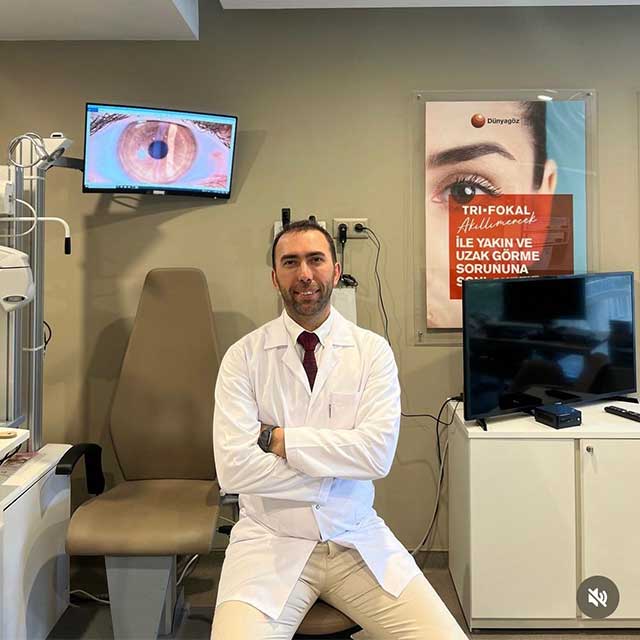
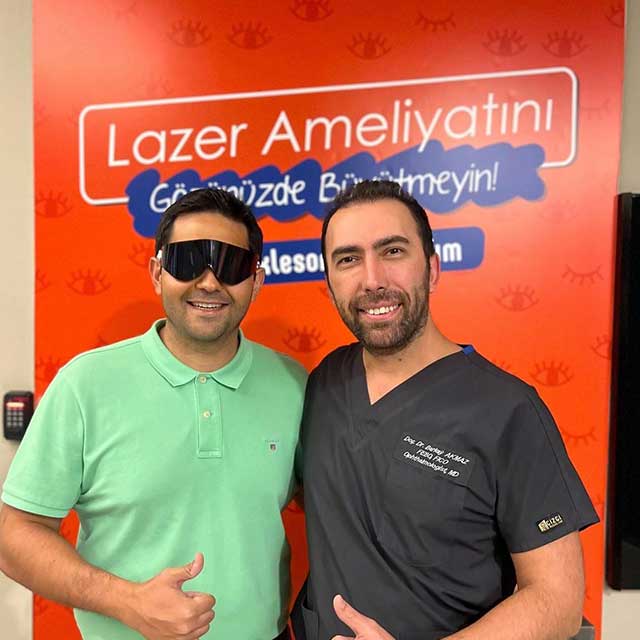
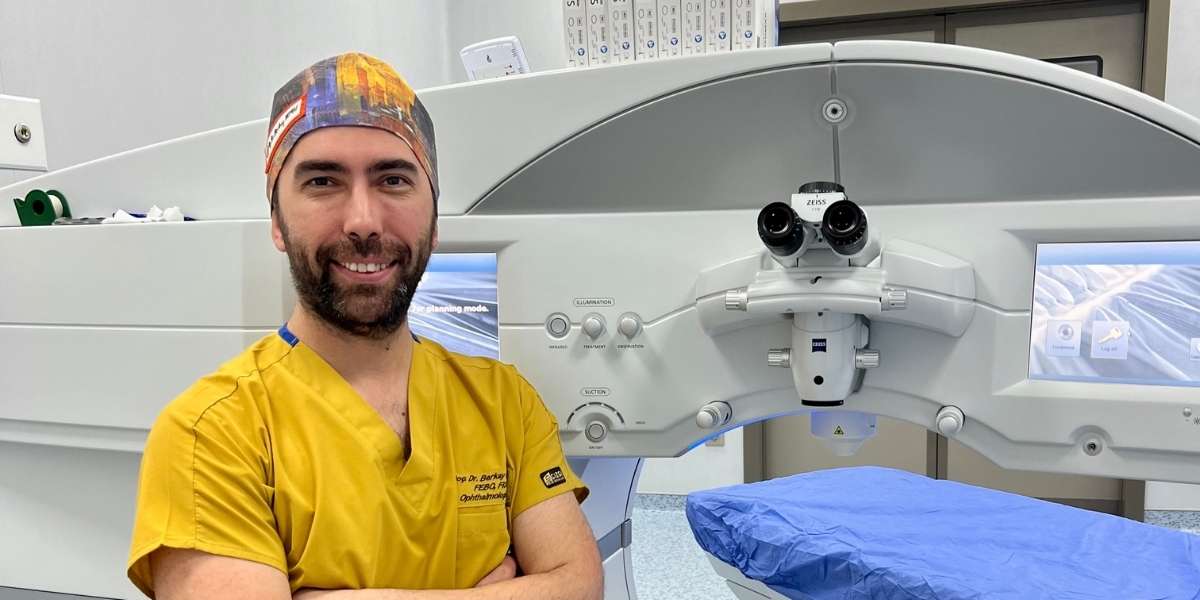
Ophthalmology Specialist – Assoc. Prof. Dr. Berkay Akmaz was born in İzmir in 1985. Due to his father's profession, he spent his primary school years in different cities. He began his education at Gülhane Military Medical Academy in 2003 and graduated with the title of Medical Doctor from Ege University Faculty of Medicine in 2010. In 2010, Assoc. Prof. Dr. Berkay Akmaz ranked 25th in the Medical Specialization Exam (TUS) in Turkey and started his specialization in the Department of Ophthalmology and Surgery at Dr. Lütfi Kırdar Kartal Education and Research Hospital. He completed his specialization training in 2014.






What Is Refractive Error Treatment?
Refractive errors lead to blurred vision as a result of the eye’s inability to focus light directly onto the retina. Treatment methods have been developed to correct refractive errors, and this development has progressed with significant historical steps. Treatment options that began with glasses and contact lenses have become more effective with the widespread use of laser surgeries.
Laser surgeries that received FDA approval in the 1990s offer more precise results with innovations like wavefront technology. Additionally, adjustable intraocular lenses approved in 2020 help correct residual refractive errors after surgery and provide new solutions for eye health.
What Are the Treatment Options for Refractive Errors?
Refractive errors occur when the eye cannot properly focus light, leading to blurred vision. They include common vision problems such as myopia, hyperopia, astigmatism, and presbyopia. Treatment options vary depending on the patient’s age, eye structure, and lifestyle. The main treatment methods include:
- Eyeglasses: The most common and simplest correction method.
- Contact Lenses: Offer a wider field of view and aesthetic advantages; available in soft, rigid, and gas-permeable types.
- Laser Eye Surgeries:
- LASIK: A laser procedure performed by creating a flap on the cornea.
- PRK / TransPRK: Surface-based laser treatments applied directly to the cornea.
- SMILE: A minimally invasive, flapless laser technique.
- Intraocular Lens Procedures:
- Phakic Intraocular Lens (ICL): An implant inserted into the eye while preserving the natural lens, commonly used in younger patients.
- Multifocal or Monofocal Intraocular Lenses: Used after cataract surgery or in older patients to correct refractive errors.
- Orthokeratology Lenses: Special night-time lenses that temporarily reshape the cornea to provide clear vision during the day.
- Smart Lens Applications: Advanced intraocular lens systems that correct both cataracts and refractive errors simultaneously.
How Does Refractive Error Treatment Work?
The treatment methods for refractive errors aim to provide clear vision by correcting the eye’s refractive power. Each of these treatment methods uses different mechanisms to ensure that light is properly focused onto the retina. Various refractive error treatments can be personalized according to patients’ needs and offer different levels of effectiveness.
- Glasses and Contact Lenses: Glasses and contact lenses help light focus properly onto the retina. These lenses include various types to compensate for refractive errors like myopia or hyperopia.
- Laser Refractive Surgery: Laser surgery methods like LASIK and PRK reshape the cornea to adjust refractive power. These methods permanently reduce refractive errors by ensuring light properly focuses on the retina.
- Orthokeratology (Ortho-K): This method temporarily reshapes the cornea with special lenses worn at night. Ortho-K allows for clear vision throughout the day without using glasses or contact lenses.
- Pharmacological Treatments: Low-dose atropine drops are used in the treatment of progressive myopia to help slow its progression. This treatment, especially effective in children, controls the elongation of the eyeball.
- Intraocular Lenses (IOLs): In cases of extreme refractive errors, intraocular lenses can provide a permanent solution by replacing the natural lens. Intraocular lenses provide the correct focusing power to correct refractive errors.
When Is Refractive Error Treatment Used?
The treatment of refractive errors is applied to increase visual acuity and improve the individual’s quality of life. Situations requiring treatment can arise in different ways.
- Decreased Visual Acuity: Refractive errors can significantly affect vision by disrupting the clarity of distant or nearby objects. In this case, treatment is necessary to improve visual acuity.
- Symptom Management: Headaches, eye fatigue, or difficulty concentrating are associated with vision problems. If these symptoms are not corrected in people experiencing focusing difficulties, more serious problems may arise. Therefore, treatment is recommended to alleviate symptoms.
- Functional Limitations: Vision defects can create difficulties in daily functions such as reading, driving, or working. Particularly in conditions like presbyopia and severe myopia, there are problems in jobs requiring detailed vision.
- Preventive Treatment in Children: Refractive errors in children should be treated early to prevent permanent vision disorders. If not treated, especially in the presence of amblyopia or anisometropia, it can lead to issues like strabismus.
- Surgical Intervention: In adults with stable refractive errors where glasses or contact lenses do not provide adequate vision, surgical intervention is considered. These methods offer a permanent solution to enhance visual quality.
- High Refractive Error: Individuals with severe refractive errors can benefit from advanced corrective lenses or surgical options. More aggressive treatments may be necessary for individuals with high myopia or astigmatism.
Who Is Not Suitable for Refractive Error Treatment?
Refractive surgery is not suitable for some individuals, and certain contraindications should be considered. Firstly, individuals who do not have a cornea of sufficient thickness are not deemed suitable for such surgeries. Particularly corneas thinner than 500 microns may pose risks during surgical procedures and can lead to structural abnormalities. Additionally, structural problems like keratoconus or other corneal diseases prevent the application of refractive surgery.
Moreover, people with autoimmune diseases are not ideal candidates for refractive surgery. Diseases like uncontrolled lupus or rheumatoid arthritis can complicate wound healing and increase the risk of infection. In individuals with dry eye syndrome, symptoms may worsen, especially after LASIK.
Other situations to be considered are as follows:
- Ocular Surface Diseases: Conditions like blepharitis or chronic conjunctivitis can increase the risk of infection.
- Pregnancy and Breastfeeding Period: Hormonal changes can cause fluctuations in vision, making treatment more difficult.
- Unstable Refractive Error: The surgical success rate may decrease in people whose vision ability is not stable.
- Glaucoma: For individuals with this condition, an increase in intraocular pressure poses a risk.
- Age-related presbyopia: Additional treatment may be required for near and distance vision in individuals over 40 years old.
These contraindications are important for the successful and safe application of refractive surgery.
How Is Refractive Error Treatment Applied?
The treatment of refractive errors offers various options according to the person’s specific needs and eye health. Firstly, glasses are a common and safe treatment method. They are designed with different lens types to correct refractive errors. Additionally, glasses are a practical solution offering comfort in daily life. Contact lenses are an ideal alternative for those who do not want to wear glasses. These lenses, placed directly on the eye, come with a wide range of usage options. They are available in various forms, including long-term use and disposable lenses.
Surgical treatment methods are also preferred to permanently correct refractive errors. Laser technology is generally used in these surgeries. Laser treatments like LASIK and PRK correct refractive errors by reshaping the corneal tissue. Along with refractive surgical methods, other options are also available. The appropriate surgical treatment method is determined according to the person’s preference and eye structure.
The most common treatment options to correct refractive errors are:
- Glasses: Corrects refractive errors with special lenses designed for myopia, hyperopia, astigmatism, and presbyopia.
- Contact Lenses: Various types of lenses placed directly on the eye instead of glasses.
- Refractive Surgery: Changes the shape of the cornea with laser or other surgical procedures.
- Phakic Intraocular Lenses (IOLs): An artificial lens is placed inside the eye in individuals with high myopia.
- Corneal Inlays: A small device is placed in the cornea for the treatment of presbyopia.
What Are the Side Effects of Refractive Error Treatment?
Some side effects and complications may occur in refractive error treatments performed with lasers. These side effects generally vary according to the patient’s individual response, the type of surgery, and the application method. Possible side effects of laser eye surgeries include:
- Dry Eyes: After laser procedures, many patients may experience a decrease in tear production. This can lead to dry eyes, vision disturbances, and discomfort. It usually improves within a few months but may last longer in some people.
- Overcorrection and Undercorrection: Occurs due to excessive or insufficient reshaping of the corneal tissue. Overcorrection usually requires glasses or lenses, while undercorrection may require a second procedure.
- Irregular Astigmatism: Irregularities in the cornea can lead to symptoms like halos, glare, and distorted vision. This condition can be controlled with additional surgical intervention or rigid lenses.
- Regression: Years after surgery, the eye may return to its previous refractive error. In this case, additional interventions may be necessary for improvement.
- Corneal Flap Complications: Problems related to the corneal flap in the LASIK procedure can lead to serious vision impairments. Wrinkles in the flap or epithelial ingrowth may require urgent treatment.
- Diffuse Lamellar Keratitis (DLK): DLK, an inflammatory condition seen after LASIK, responds to steroid treatment. However, in severe cases, it carries the risk of scarring and vision loss.
- Infectious Keratitis: Although rare after laser treatment, it is a serious complication. If timely antibiotic treatment is not applied, it can lead to scarring or vision loss.
- Corneal Ectasia: This complication, characterized by thinning and forward bulging of the cornea, can cause significant vision problems. This condition, which requires treatment, can be controlled with corneal transplantation or cross-linking.
- Glare, Halos, and Night Vision Problems: Especially occur in the early periods after surgery. These effects, which can be permanent in some cases, can make night driving and seeing in low light conditions difficult for the patient.
How Successful Is Refractive Error Treatment?
Refractive error treatments offer high success rates and improve the visual quality of many patients. Methods like LASIK, PRK, SMILE, and Refractive Lens Exchange (RLE) provide effective solutions in increasing visual acuity. LASIK offers successful results with over 90% achieving 20/20 visual acuity. It also allows over 99% of patients to reach 20/40 visual acuity. PRK requires a slightly longer recovery time but provides 20/20 vision in 70-90% of cases and 92% reach 20/40 visual acuity. The SMILE method has similar success rates to LASIK, with 90% of patients achieving 20/20 visual acuity.
- LASIK: Over 90% success, 96% satisfaction rate, low risk of complications
- PRK: 70-90% success, 92% achieve 20/40 vision, longer recovery time
- SMILE: 90% success, 99% achieve 20/40 vision, lower risk of dry eyes
Refractive Lens Exchange (RLE) provides long-term visual stability for elderly patients or those with high refractive errors. This method has high satisfaction rates, especially in patients with problems like presbyopia or cataracts. However, since it is a more invasive procedure, it carries a higher risk of complications compared to LASIK or PRK. In general, each treatment method improves visual quality and provides significant benefits in daily life.
How to Prepare for Refractive Error Treatment?
There are a series of important steps to prepare for refractive error treatment. These steps are necessary both to ensure treatment safety and to support successful treatment outcomes. Each patient first undergoes a comprehensive eye examination. This examination includes details such as determining corneal thickness, evaluating the shape of the eye, and assessing any irregularities. Additionally, the health of the retina and optic nerve is checked.
Patients using contact lenses need to stop lens use for a period before surgery. This period varies according to the type of lens:
- 1-2 weeks for soft contact lens users
- Up to 4 weeks for rigid contact lens users
It is important to screen for dry eye before surgery. If there is dry eye syndrome, necessary precautions are taken to prevent it from affecting the treatment process. Dry eye symptoms can be reduced with artificial tears, punctal plugs, or medication therapy.
It is also important for patients to form realistic expectations before surgery. The surgeon provides detailed information about treatment outcomes and explains the benefits and possible risks. This briefing helps patients develop a correct understanding of the process.
Additionally, some medications may be prescribed before surgery to reduce the risk of infection. On the day of surgery, patients are advised not to use makeup, lotion, or perfume. It is also important to plan transportation in advance for after the surgery.
How Should Post-Treatment Care Be After Refractive Error Treatment?
Postoperative care after refractive error correction surgeries is very important for the patient to have a healthy recovery process. Medication use helps protect eye health. Therefore, regular use of antibiotic and anti-inflammatory eye drops prescribed by the doctor after surgery reduces the risk of infection and accelerates healing.
In addition, artificial tears are recommended to cope with dry eye problems after refractive surgery. These drops help deal with dryness, especially in the first days after surgery. Preservative-free drops are preferred to prevent irritation. Thus, comfort is provided in the eye, and the healing process is supported.
Protecting the eyes from environmental factors after surgery is also of great importance. Therefore, patients are advised to use an eye shield while sleeping during the first week. In this way, the eyes are protected against trauma, and damage to the sensitive tissues in the eye is prevented.
Preventing eye fatigue after surgery also contributes to recovery. Activities such as looking at a screen for a long time or reading a book may cause discomfort during the healing process. Avoiding such activities supports eye health.
It is critically important for the patient to attend regular follow-up visits after surgery. These visits are made to ensure that the eye is healing healthily. A control appointment is usually scheduled within the first 48 hours after surgery to monitor the healing process and prevent complications.
Finally, it is advised to avoid exercise and dusty environments. The patient is recommended to stay away from strenuous activities for a month. In this way, the healing process is supported, and infection risks are minimized.
How Does Resistance Develop Against Refractive Errors?
The mechanisms of resistance developing against the treatment of refractive errors are shaped by the combination of various factors. These factors originate from both biological and environmental effects, and procedural factors can also be effective after treatment. After laser-assisted surgical treatments, especially in individuals with high refractive errors, the corneal tissue may return to its original curvature due to biological healing responses. Features such as corneal thickness, age, and the amount of correction required are among the main biological factors affecting this regression.
In addition, the corneal structure thinned during treatments carries the risk of biomechanical instability. The weakened cornea becomes abnormally shaped over time, which can reduce the effectiveness of the treatment. Undesired outcomes such as ectasia may occur, especially in patients with pre-existing conditions like keratoconus. On the other hand, axial length elongation may limit the long-term effectiveness of myopia treatment. If the axial length continues to elongate during the development of myopia, the refractive error may progress, leading to the need for re-treatment.
Especially in hyperopia treatment, the decrease in accommodation can cause the refractive error to recur. While young individuals can adapt with the eye’s focusing power, this ability begins to decrease during the aging process, necessitating re-treatment.
Finally, genetic and environmental factors play an important role in resistance mechanisms to treatment. Environmental effects such as genetic predisposition and prolonged near work can lead to the progression of refractive error and trigger resistance mechanisms against treatment.
Recent Posts

Dermatochalasis (Eyelid Sagging)
Anasayfa » Eyelid » Dermatochalasis (Eyelid Sagging)Dermatochalasis (eyelid sagging) is a condition caused by excess [...]
Read MoreMar
Congenital Cataract
Anasayfa » Cataract » Congenital CataractCongenital cataract is an eye disease that occurs when the [...]
Read MoreMar

Causes of Blurred Vision in One Eye
Anasayfa » Eye Health » Causes of Blurred Vision in One EyeThe causes of blurred [...]
Read MoreDec

Comments from Patients with Pseudotumor Cerebri
Anasayfa » Uncategorized » Comments from Patients with Pseudotumor CerebriComments from patients with pseudotumor cerebri [...]
Read MoreDec

Reviews of People Who Have Undergone Corneal Surgery
Anasayfa » Eye Health » Reviews of People Who Have Undergone Corneal SurgeryReviews from people [...]
Read MoreDec
Keratoconus Patient Reviews
Anasayfa » Eye Health » Keratoconus Patient ReviewsKeratoconus patient reviews provide important insights into the [...]
Read MoreDec

How Long Does Cataract Surgery Take?
Anasayfa » Cataract » How Long Does Cataract Surgery Take?The answer to the question of [...]
Read MoreDec
How Do Under-Eye Dark Circles Go Away?
Anasayfa » Uncategorized » How Do Under-Eye Dark Circles Go Away?The question of how under-eye [...]
Read MoreDec
Gallery